Thailand looked at its neighbours raising rates, and refused for a fourth meeting in a row
The Bank of Thailand held its policy rate at 1.00 percent unanimously on Wednesday, raised its growth forecast to 2.4 percent, and still described an economy growing below its potential.
Bangkok, Thailand · October 28, 2026
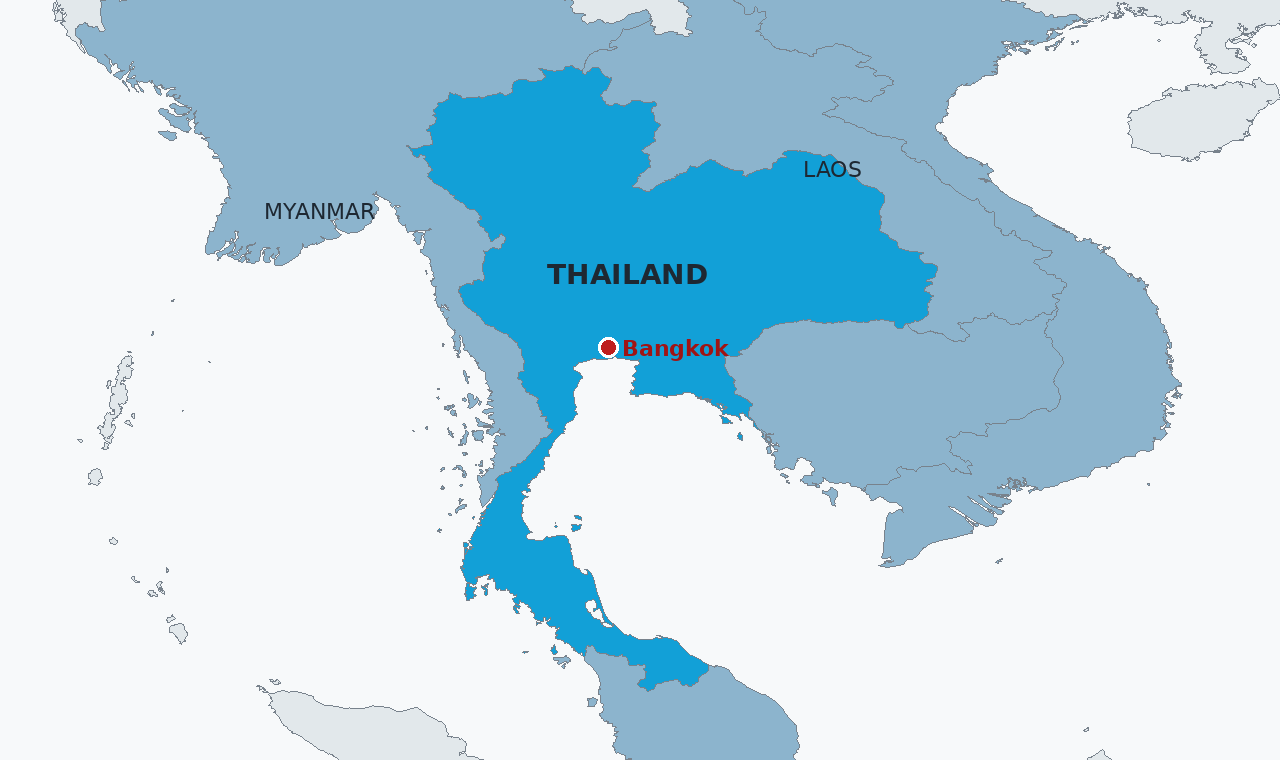
While central banks around it, including the Philippines, have raised interest rates against inflation driven by the war in the Middle East, Thailand's central bank has now refused four meetings in a row. The Bank of Thailand's monetary policy committee voted unanimously on Wednesday to keep the one day repurchase rate at 1.00 percent. All 26 economists polled by Reuters had expected the hold, the baht barely moved after the decision, and most of those economists now expect the rate to stay where it is through the end of 2027. The next meeting is on December 23.
The odd part is that the bank sounded a little more cheerful and held anyway. It raised its growth forecast to 2.4 percent for this year and 2.1 percent for 2027, up from 2.3 and 1.8 percent in June, on stronger exports and on private investment tied to technology and artificial intelligence. Then it added the sentence that explains the decision: overall growth remains below potential, and the benefits remain concentrated. Southeast Asia's second largest economy grew just 1.9 percent in the second quarter, down from 2.8 percent in the quarter before, and grew 2.4 percent last year while lagging its regional peers.
Why a central bank holds while neighbours hike comes down to what each economy can bear. Thailand cut its rate six times between October 2024 and February 2026, by 150 basis points in total, to support an economy held back by sluggish domestic demand and high household debt. Households carrying that much debt feel a rate rise faster than they feel imported inflation, and weak consumption means the usual channel from higher rates to lower prices runs through an economy that is already short of spending. An assistant governor put the bank's logic plainly at the briefing: low rates will have a long term effect, and if the economy is strong enough, rates can gradually rise to rebuild policy space.
The risk in that patience is named in the bank's own forecasts. Headline inflation is projected at 2.1 percent this year, rising temporarily into early 2027 on higher energy prices and El Nino before easing, and the bank warned that Middle East uncertainty and cost pass through could push inflation above its projections. Thailand imports its energy, so a longer regional war hits Bangkok through fuel and food prices whether the policy rate moves or not. Holding is a bet that the inflation is imported and temporary, and that the domestic economy is too weak to be the problem.
Our call is that Thailand is making the right bet for its own economy and will still pay a price for it in the currency markets if the war worsens. A central bank that hikes into weak consumption and heavy household debt to defend against imported inflation usually gets the recession without stopping the inflation. But patience only works while investors believe the forecast that inflation fades by early 2027. Watch the December 23 meeting language, not the rate, which will almost certainly hold again. If the bank stops saying growth is below potential, the long hold is ending. If it starts warning harder on inflation, the neighbours' path is coming to Bangkok too, just later.
The Briefing
The day's world, market and sport, measured and in your inbox before breakfast. One email, no noise, free while we build it.
Subscribe by emailSubscribing opens your email app with a note to [email protected]. We never share your address.