The pact built to contain Iran just sat down with Iran, and both sides needed the photograph
Saudi Arabia's defence minister, Pakistan's army chief and Turkiye's intelligence chief met President Pezeshkian in Tehran on Monday, the first high level contact between Iran and the Mecca pact since the war spread. An alliance organised against a threat is now negotiating with it.
Tehran, Iran · October 27, 2026
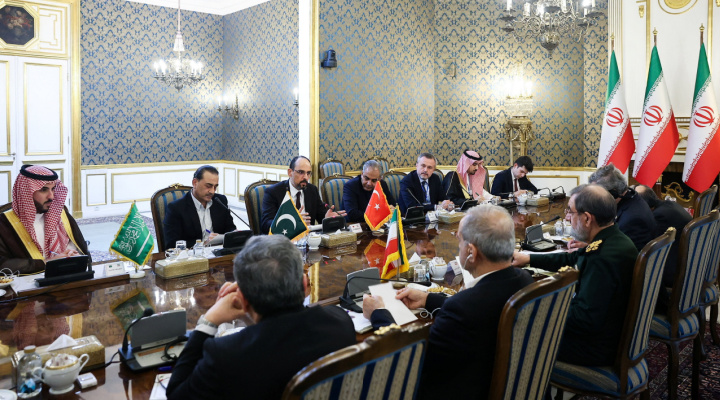
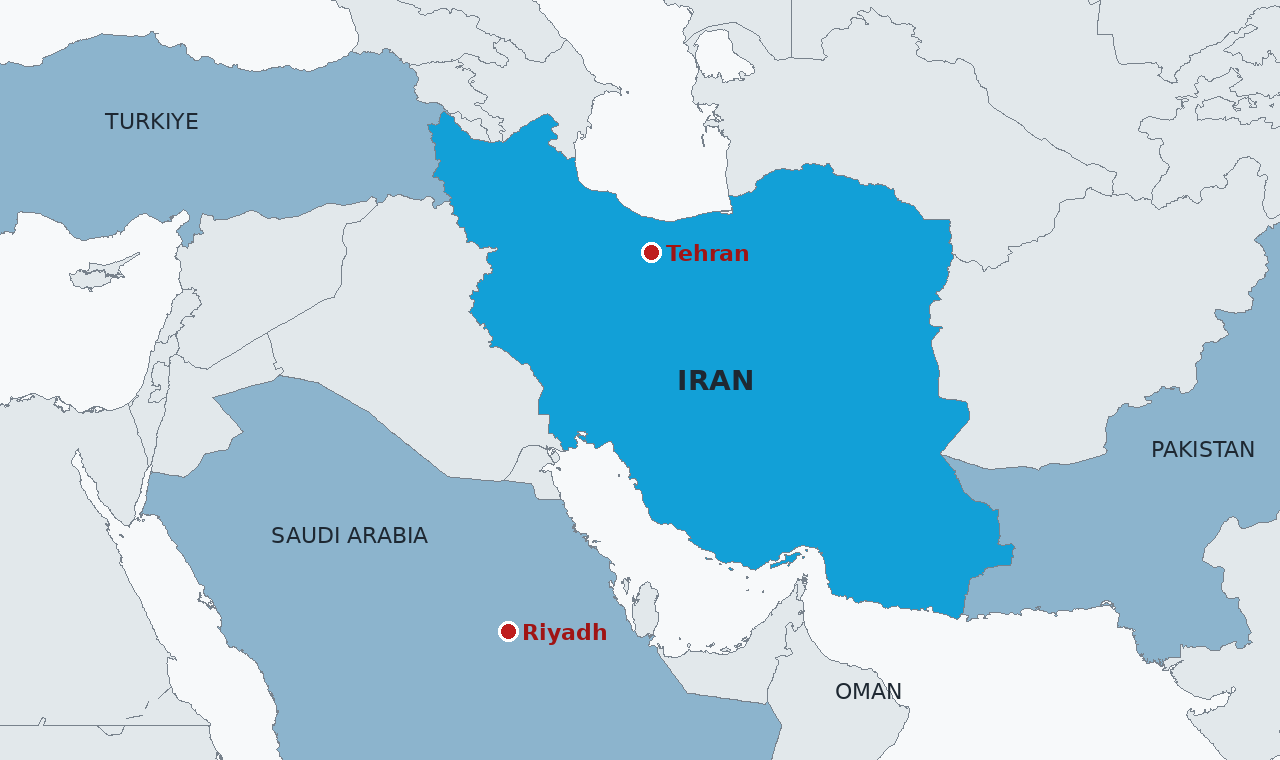
The table in Tehran on Monday held a combination nobody would have seated together a year ago. On one side, Iran's President Masoud Pezeshkian, his foreign minister Abbas Araqchi and security chief Mohsen Rezaei. Facing them, the three men who run the security of the Mecca pact: Saudi defence minister Prince Khalid bin Salman, Pakistan's army chief Field Marshal Asim Munir and Turkiye's intelligence chief Ibrahim Kalin. The pact they represent was signed in August as a mutual defence alliance, an attack on one treated as an attack on all, and its unstated organising principle was the threat from Iran. This was the first high level contact between Tehran and all three since the war that began with American and Israeli strikes on Iran spread to Saudi Arabia and Yemen.
Each side brought its own description and they do not quite match, which is normal for a first meeting and useful for both. Saudi Arabia's foreign ministry said the visit opens negotiating channels to prevent the return of military escalation, and a Saudi deputy minister framed it as reducing tensions and supporting diplomatic solutions. Iranian officials talked about endogenous security, a regional order run by the region's own states, and said Pakistan proposed the meeting. State media on the Iranian side reported agreement to keep talking, with cooperation in peace and security at the top of the list. Nobody announced a deal, a ceasefire or a concession. The product of the day was the meeting itself, photographed, flagged and published by both camps.
The war made the meeting necessary for everyone in the room. The fighting disrupted shipping through the Strait of Hormuz, the channel for about a fifth of the world's oil and liquefied natural gas before the war, and it has since opened a second front between Saudi Arabia and Yemen's Houthis, who have struck airports and oil facilities in the kingdom. An interim agreement in June, built with Pakistani and Qatari mediation, collapsed, and the fighting resumed. Qatari mediators were in Tehran again on Sunday, a day before the pact's delegation arrived, which tells its own story about how many channels are now being kept warm at once.
For the pact members, the logic is uncomfortable and straightforward. An alliance can deter Iran, but it cannot de-escalate with Iran at a distance, and deterrence failed to keep the war from reaching Saudi soil. For Tehran, hosting the three men who embody the alliance against it is proof that isolation has a ceiling, and that the region's security conversation now runs through its capital as well as around it. Both readings can be true at the same time, and Monday's choreography was designed to let each capital sell its own.
What to watch is whether the channel acquires a subject. Talks that continue in general are a mood. Talks that take up Hormuz shipping, the Houthi front or the terms that failed in June become a negotiation, and negotiations produce losers as well as communiques, which is why governments postpone naming the subject for as long as the photographs keep working. The United States and Israel are the unnamed parties in every room this pact enters, and any understanding Tehran reaches with Riyadh will be measured in Washington before it is measured in the Gulf.
Our call is that the channel stays open and becomes permanent, because the alternative every capital at that table has now tasted is a regional war none of them controlled, and a standing line to Tehran is worth more to Riyadh, Islamabad and Ankara than the purity of an alliance that never speaks to its adversary. Expect the pact to keep its deterrent language in public and its diplomacy in private, and expect Iran to treat each new meeting as evidence that the wall built around it has a door. The pact was built to contain Iran. Its first real achievement may be discovering that containment, practised seriously, requires conversation.
The Briefing
The day's world, market and sport, measured and in your inbox before breakfast. One email, no noise, free while we build it.
Subscribe by emailSubscribing opens your email app with a note to [email protected]. We never share your address.