The students have won Serbia, and Vucic has said it himself
Ninety minutes after the polls closed, Aleksandar Vucic stood in front of his own party and conceded an election his side had run Serbia through for fourteen years. The official count still looks close. The parallel counts, the turnout and the map all point the same way: a protest movement that began under a fallen station canopy is about to become a government.
Belgrade, Serbia · October 25, 2026
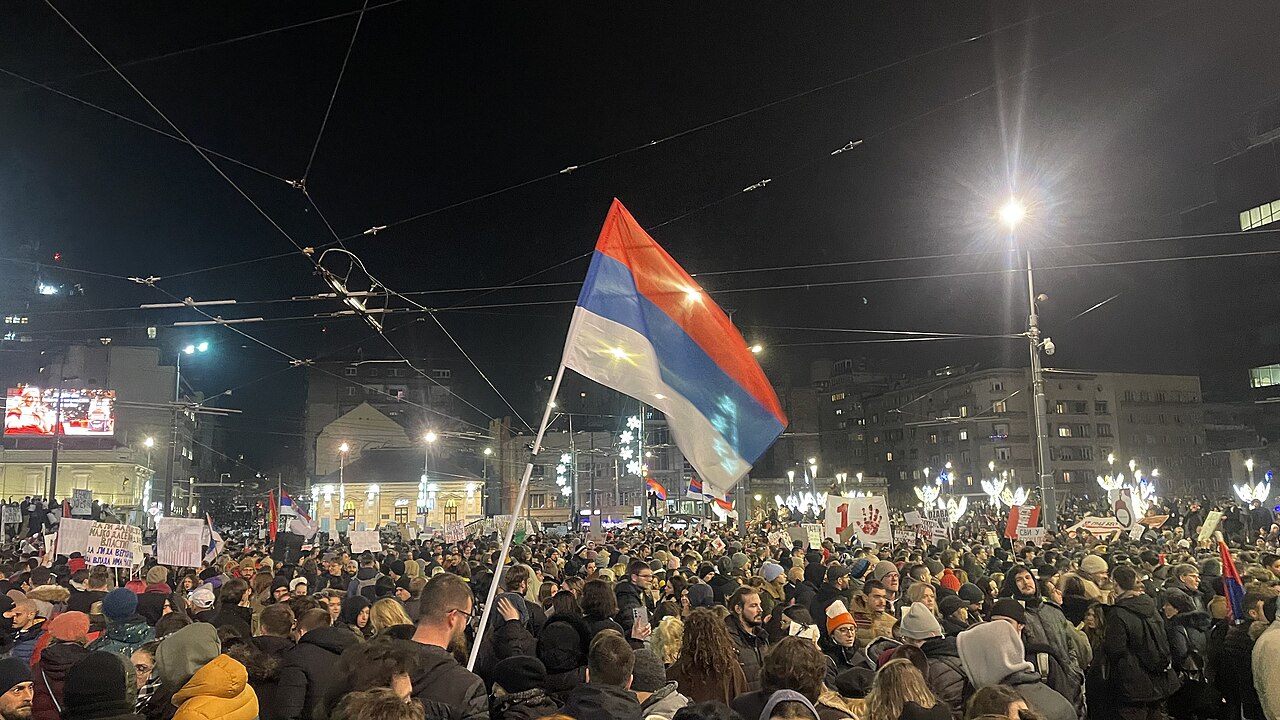
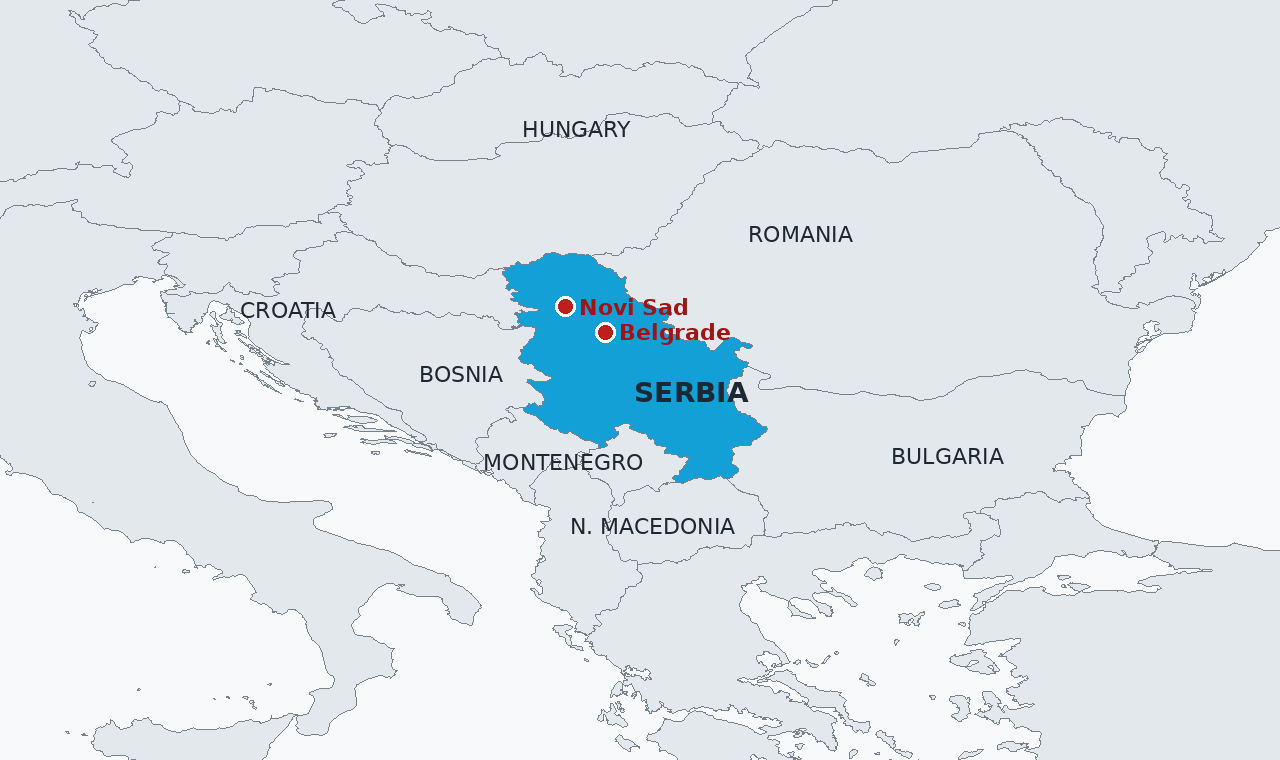
The concession came before the count could. About ninety minutes after polls closed on Sunday night, Aleksandar Vucic appeared in front of his own party and said the quiet part out loud. "We still do not have final results, on the basis of a sample, it is clear that we have lost these elections, the Student List has won," he said, putting the students on between 135 and 140 seats and his own list on about 105. A leader who has dominated Serbian politics since 2014, first as prime minister and then as president, had just handed an election to a movement that did not exist as a political force two years ago.
Anyone watching only the official tally would have wondered what he was talking about. With 28 percent of polling stations reported, the Republic Electoral Commission count had the Student List on 45.9 percent and Vucic's United Serbia on 45.7, close enough to touch. That closeness is an artefact of the order in which Serbia counts. Small and rural stations report first, the big cities report last, and the first official release of the night, from just 203 stations, had United Serbia ahead by more than eighteen points. The parallel counts, which sample stations properly, told the real story all evening. CeSID and Ipsos put the Student List on 52.0 percent, and the election monitor CRTA put it on 51.47 percent, against 40.42 for United Serbia.
Turn those shares into seats and the result stops looking close at all. The CeSID and Ipsos projection gives the Student List 138 to 139 of the 250 seats, clear of the 126 it needs to govern alone, with United Serbia falling to 104. The Hungarian alliance takes three seats, the Albanian Coalition two, and there is one each for the lists led by Rasim Ljajic and the SDA of Sandzak. The Socialists, partners in power for a decade, fall below the three percent threshold and win nothing. Add every minority list to Vucic's side and it still reaches only 111. There is no version of the arithmetic, on the projections, that keeps him in power. Turnout did its part too: CeSID and Ipsos put it at 67.6 percent by 7pm, the highest in Serbia since 1992.
The geography underneath matches the way the movement was built. In the votes counted so far, the students lead in the bigger towns of Vojvodina and the west, the country the marches crossed on foot for months, and the one Belgrade municipality in the early sample went their way narrowly, with the capital's big stations still to come in. Vucic's machine held the rural south and east, in places by forty points and more, by 48 points in Bojnik on the counted vote. In the far south, Bujanovac voted for the Albanian Coalition. Kosovo, which did not vote in this election, changes nothing in tonight's count and everything about the hardest file the new government inherits, because whoever governs in Belgrade now has to negotiate it.
Belgrade answered the concession the way the campaign had promised it would. Horns, flares and crowds filled the centre of the capital, chanting one word back and forth: victory. Radomir Sajcic told the state broadcaster RTS that Serbia had finally taken its destiny into its own hands, a result that rewarded nearly two years of struggle. Ilija Srdanovic, the cardiologist who heads the Student List, put it more bluntly: never again a tyrant in our country. It is worth remembering what those two years were. On November 1, 2024, a concrete canopy at Novi Sad railway station collapsed and killed sixteen people. Students demanded justice for a disaster they blamed on corrupt, shoddy construction, blockaded their faculties, and then kept going, town by town, until a protest had become an organisation that could field 250 candidates and win.
Winning was the part the movement had rehearsed. Governing is not, and the questions it spent the campaign stepping around are now sitting in its inbox. Its settled promises are the ones that united it: courts and prosecutors free of political pressure, an end to the patronage machine, education and healthcare open to everyone on the same terms. On Europe, on Kosovo and on Russia, including sanctions on Moscow, it offered voters very little detail, because detail is where a broad coalition starts to argue with itself. Vucic, for his part, blamed independent media, unnamed European countries and what he called an American deep state, described the students' campaign as unfair and foreign backed, and said he would not challenge the result in court and would not leave the country. Election monitors logged claims that will follow the count for weeks, among them ballot photographing, attempted vote buying and carousel voting, reported as claims, not settled findings. And the calendar gives nobody a rest: a presidential election must be held by December 27, for the post Vucic vacated in September, with Ana Brnabic as acting president in the meantime.
Our call is that the students' majority is both larger and narrower than it looks, and how they use the next eight weeks decides which. Larger, because 138 or 139 seats won without a leader, a party machine or a single television station on their side is a mandate no Serbian government has had to argue with in years. Narrower, because the mandate is a verdict on Vucic and on corruption, not a settled answer on Europe, Kosovo or Russia, and the December presidential vote will force exactly those questions while the new government is still finding its offices. Expect them to move first and fast on the courts and the patronage system, the one ground where every part of their coalition agrees, and to park the foreign policy fights until after December if they possibly can. If they do, Serbia gets a real break with fourteen years of one man's rule. If the parked questions break the coalition open first, tonight becomes the high point of the movement rather than the start of its government, and that is the risk hidden inside a famous victory.
The Briefing
The day's world, market and sport, measured and in your inbox before breakfast. One email, no noise, free while we build it.
Subscribe by emailSubscribing opens your email app with a note to [email protected]. We never share your address.