Serbia votes, and for the first time in fourteen years Vucic could actually lose
A protest movement born when a station canopy fell in Novi Sad and killed sixteen people now fields 250 candidates against Aleksandar Vucic and his party. The polls disagree, the final rally filled Slavija Square, and 126 seats decide who governs.
Belgrade, Serbia · October 25, 2026
Serbia votes today in a snap parliamentary election that neither side expects to lose, and for once that is not just campaign talk. About 6,450,523 registered voters choose 250 members of the National Assembly across 8,392 polling stations, with polls open until 8pm and 126 seats needed for an outright majority. Eighteen lists are on the ballot, but the contest has narrowed to two: the ruling list led by Aleksandar Vucic, whose Serbian Progressive Party has held power since 2012, and a Student List that did not exist as an electoral force until the protests forced it into being.
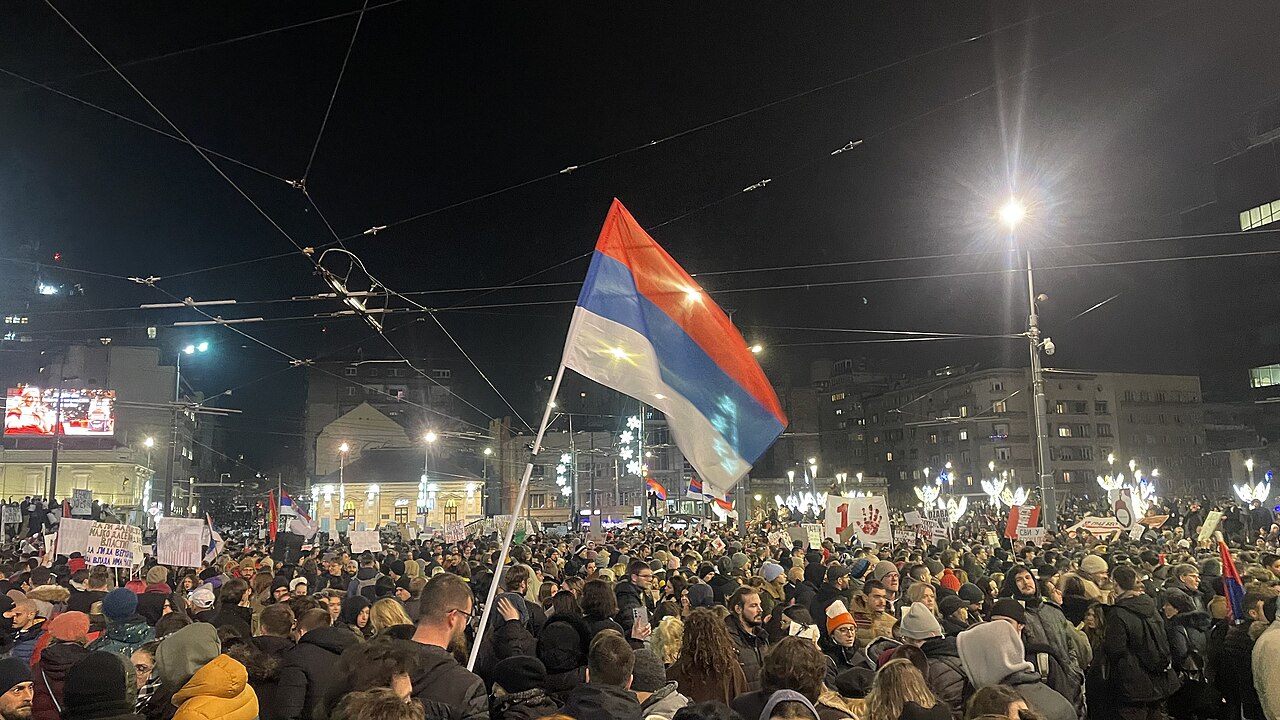
On Thursday night the students showed what they have built. Around 150,000 people gathered at Slavija Square in Belgrade for the final rally, on the estimate of the Archive of Public Gatherings, after supporters marched into the capital over several days from the east, west and north. Other counts ranged far lower and far higher, which tells its own story about a country arguing over the size of the crowd because it cannot agree on much else. They waved Serbian flags and Students Win banners, blew whistles, lit flares and chanted one word: victory.
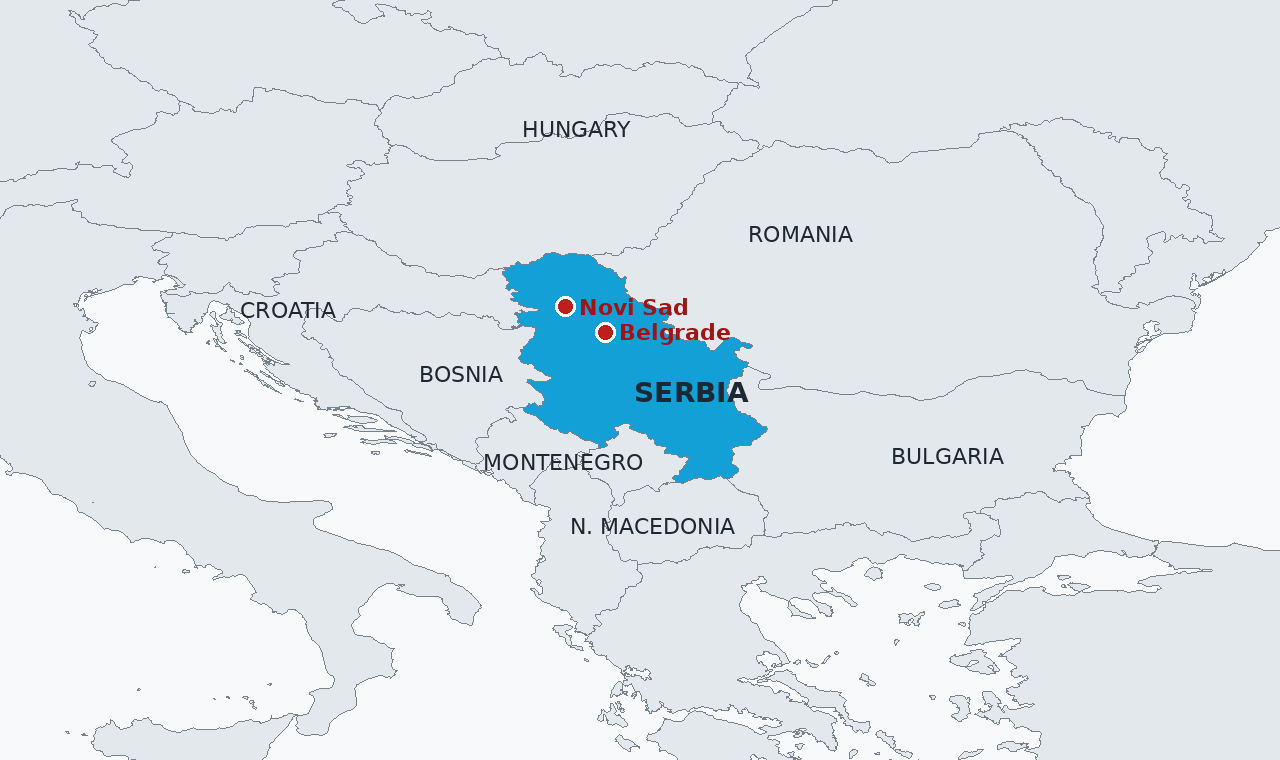
It started in Novi Sad, in the north, on November 1, 2024, when a concrete canopy at the recently renovated railway station collapsed and sixteen people died. Students demanded justice and an end to the corruption they believed had produced shoddy construction, blockaded their faculties, and then did the thing protest movements usually fail to do. They kept going, town by town, until a demand for accountability had become a nationwide organisation capable of fielding a full slate.
That slate carries its own twist. Not one of its 250 candidates is a current student. The names were picked through student assemblies and the list is headed by Ilija Srdanovic, a cardiologist and professor at the University of Novi Sad, alongside other professors, actors, farmers, a popular rapper and Mihail Dudas, a two time Olympic decathlete. The students chose the candidates, then stepped back and let them run. It is a deliberate answer to the charge that a street movement cannot govern: the faces are professionals, even if the energy behind them is not.
The numbers say the race is real, and they also say nobody should pretend to know the result. The only poll Reuters could point to earlier this month, from New Serbian Political Thought and published on October 20, put the Student List at 44.5 percent among decided voters to 42.7 for Vucic's coalition, with 18.3 percent undecided or refusing to say. A later Ipsos survey, commissioned for the ruling list and conducted from October 20 to 22, put Vucic ahead instead, at 47.4 percent to 40, and a September Faktor Plus poll had the governing coalition further in front. Different samples, different sponsors, different answers. Betting odds, Reuters noted, still favour Vucic.
Vucic has dominated Serbian politics since 2014, first as prime minister and then as president, and he is not treating this as a farewell. Barred from a third presidential term, he stepped down as president on September 27 to run for prime minister again, the job he held before, and at a rally in Novi Sad he promised his supporters their biggest landslide victory yet. He held his own closing event in Belgrade on Thursday, in a sports hall across town from Slavija Square, two rallies in one capital on one night, each claiming the country.
What neither campaign has talked about much may matter most the morning after. The Student List has given scant detail on joining the European Union, on relations with Kosovo, or on Russia, beyond saying it would not introduce sanctions on Moscow. Russia is Serbia's traditional ally and its principal supplier of natural gas, and Vucic has built his foreign policy on balancing Moscow and Beijing against an open door to Brussels. A student led government would inherit that balance on day one, with no settled position of its own and a coalition held together mainly by opposition to corruption and to Vucic himself.
Our call is that topping the vote and taking power are two different tests here, and the students are likelier to pass the first than the second. The small lists clustered just below the three percent threshold, the undecided voters the NSPM poll counted at more than eighteen percent, and a ruling party machine that has won every national contest since 2012 all tilt the seat count toward Vucic even on a night when his vote share slips. Watch turnout outside Belgrade, in the smaller towns the marches spent months courting, because that is where a protest becomes a majority or stays a movement. If the students clear 126, Serbia changes course overnight. If they finish first and still fall short, expect a scramble for coalition partners, a Vucic who claims survival as victory, and a movement that has to decide whether the streets are a tactic it can use twice.
The Briefing
The day's world, market and sport, measured and in your inbox before breakfast. One email, no noise, free while we build it.
Subscribe by emailSubscribing opens your email app with a note to [email protected]. We never share your address.