Talks by day, missiles by night: Putin opens the door, then Kyiv counts the damage
Russia said it was ready in principle to resume peace talks, and that night 21 ballistic missiles hit Kyiv and none was intercepted. Inside a week of choreography: the Oslo framework, the palace meeting, the terms Putin read out on television, and why the November round is designed to be seen rather than to settle.
Kyiv, Ukraine · October 22, 2026
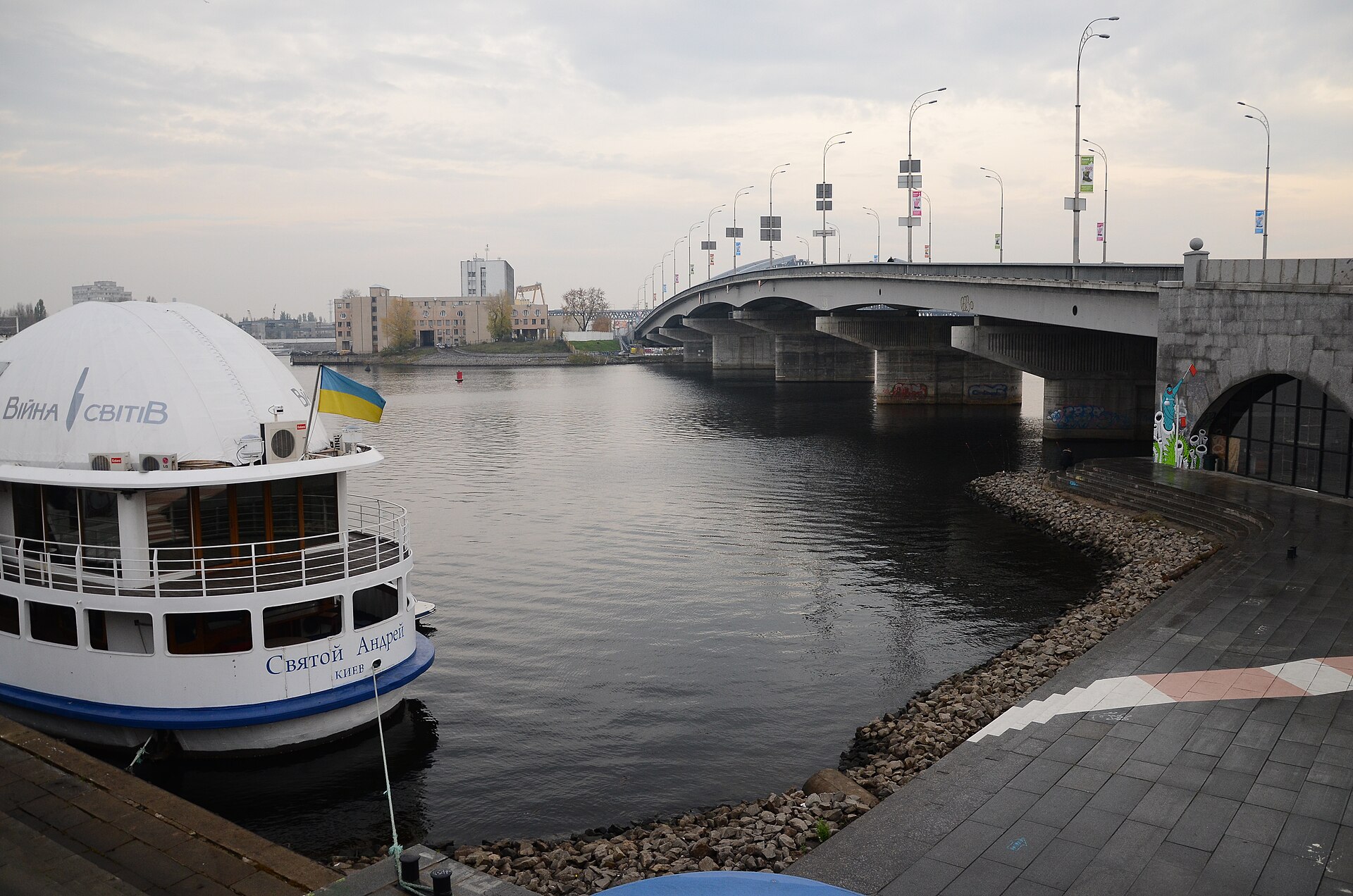
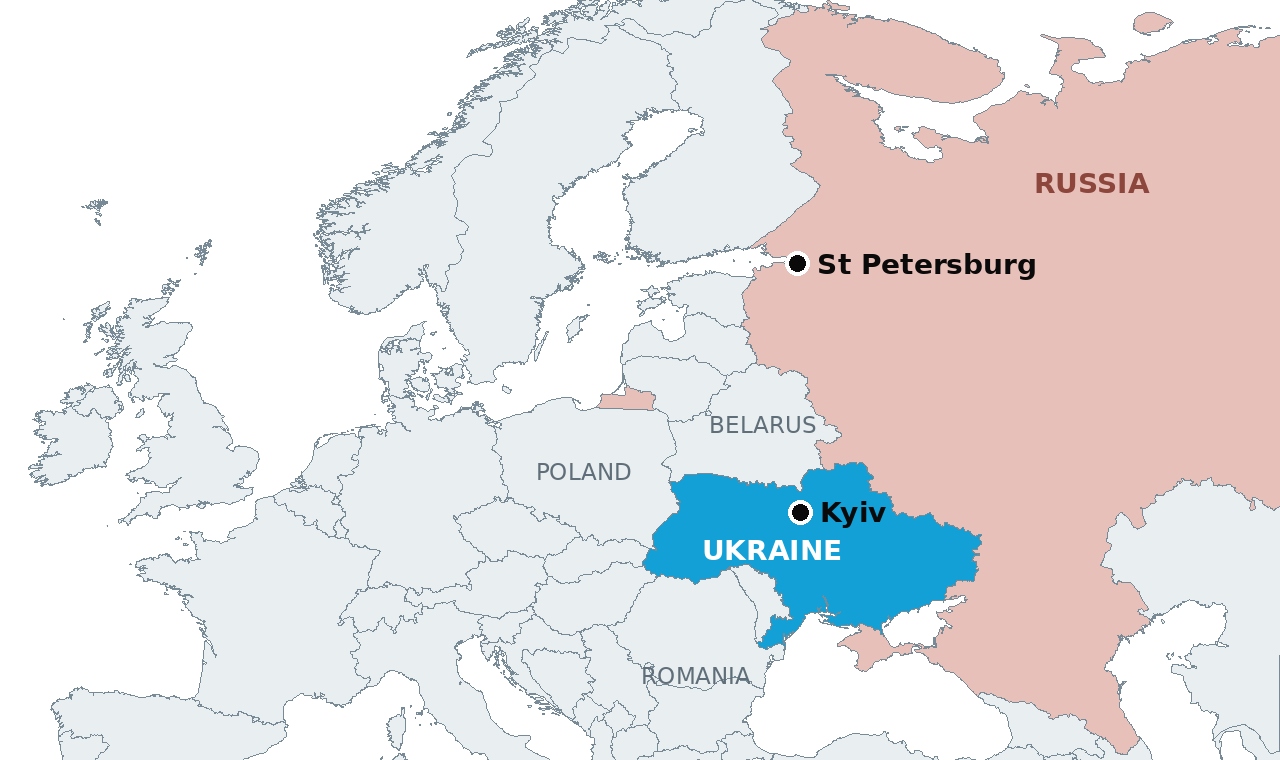
The missiles arrived on the same day as the promise, in three waves. On Wednesday evening, hours after the American envoy Steve Witkoff had sat with Vladimir Putin in a palace outside St Petersburg and called him a humanitarian for releasing an American prisoner, the first ballistic missiles came down on Kyiv at about ten o'clock. Two more waves followed in the small hours, at two and at half past three. By the Ukrainian Air Force's count the night brought 21 ballistic missiles aimed at the capital inside a combined assault of 210 attack drones, and not one of the ballistic missiles was intercepted. Houses burned in five districts. An ambulance station was wrecked along with six ambulances. The metro line over the Southern Bridge, the same bridge Russian drones had already struck at the start of the month, ran in two pieces. Mayor Vitali Klitschko's first count on Wednesday night was six people injured. By Thursday morning the city prosecutor's office put it at one killed and twenty four injured in Kyiv, and President Volodymyr Zelensky, counting the twelve regions attacked overnight, reported two dead and thirty four injured, five of them children. The week had been built to end in a breakthrough. It ended as the purest statement yet of how this war's diplomacy actually works.
The week had been built carefully. On Tuesday, in Oslo, Witkoff met Zelensky with Norway's prime minister and Finland's president in the room and European and NATO representatives alongside, and the American account of it was unusually substantive: Ukraine had brought forward new ideas, the talks had covered the key elements of a comprehensive peace framework, security guarantees for Ukraine, a post war economic plan and a broader European security architecture. Zelensky emerged talking about Article 5-like guarantees, NATO's mutual defence clause in all but name, and said the American side had underlined that they would be strong. He confirmed something else that mattered as much: after a period in which Kyiv complained Washington had withheld warnings of incoming missile attacks, the early warnings were flowing again. Now it works, it is great, he said. Kyiv had come to Oslo to repair a relationship that had sunk, on Reuters' description, to new lows, and by the American readout it had worked.
On Wednesday the choreography moved to the Konstantin Palace at Strelnya, where Witkoff talked with Putin for about three hours, with the Kremlin aide Yuri Ushakov and the investment envoy Kirill Dmitriev in the room and Jared Kushner joining by video. Witkoff said beforehand that there was some degree of momentum. The meeting produced one genuine human outcome: Russia released Stephen Hubbard, a 74 year old retired American teacher held since 2022 on charges Washington calls fabricated, and he was handed over at the airport and flown home. It was in the televised opening, thanking Putin, that Witkoff offered the compliment that would follow the week around: you talk about my president being a humanitarian, you are a humanitarian also, sir. London, asked about it the next day, replied through a Downing Street spokesperson that we do not recognise that characterisation. Two Republican senators said worse in public. And Ushakov's readout of the substance was a study in managed coolness: Putin was willing in principle to resume three way talks next month, focused on building a security system for Russia and Ukraine after the conflict ends, but the new nuances brought from Oslo did not entirely satisfy Moscow. The Kremlin spokesman Dmitry Peskov, asked whether Washington's proposals had moved, said they had not heard a single statement that would indicate it.
Then the night made its own statement. Ukraine's air force said defences downed or suppressed 181 of the 210 drones, a rate that would once have been the story, but every ballistic and cruise missile got through, striking 32 locations. In the Dniprovskyi district a 48 year old man was killed and neighbours pulled a couple from a burning house; thirteen detached houses were destroyed. Zelensky, who had spent the week being told the talks were constructive, reached for the word Witkoff had given him and turned it: three waves of ballistic missiles have been launched at Kyiv by Russian humanitarians since yesterday evening, they used 21 missiles. His fuller judgement was that almost immediately after another round of talks, Russia had launched a pointed attack, which meant there had been no real change in its attitude toward everything that is happening. His demands were a list of the things the week had not produced: stronger air defences, rapid delivery of missiles, the ability to destroy the launchers, sanctions over the war. His foreign minister, Andrii Sybiha, was blunter: appeasement, servility and flattery will not stop this war, only strength will.
On Thursday Putin said what his yes covers, in a television interview a day after the meeting. The goal of the talks, he said, would be to ensure the security of Ukraine and Russia after reaching peace agreements, in their final form, not as a result of a temporary ceasefire for some short period of time. He agreed the architecture of European security as a whole should be discussed. On territory he was explicit that any discussion had to reckon with the Donbas being, in his formulation, historically Russian land: firstly, my attitude on this matter is that this is not their territory, it is the territory of historical Russia. The standing demands behind the formulation are unchanged: Ukraine cedes all of the Donbas, caps the size of its armed forces and is permanently barred from alliances. And the terms have recently grown rather than shrunk. Six days earlier, in military uniform at a command post, Putin announced that Russian forces were carving a security zone inside Ukraine along the border, 660 kilometres of it on his spokesman's account, and declared it would not be a subject for potential peace negotiations at all.
What Kyiv brings to this table, and what it cannot bring, was set by Washington as much as by Moscow. Zelensky told Bloomberg last weekend that the United States now supplies about twelve Patriot interceptors a month, roughly a quarter of the earlier rate, and that a significant batch bought by allies through NATO's purchasing mechanism sat ready, paid for, awaiting the defence secretary's signature. The missiles are ready and they could already be in Ukraine, he told American senators, but there is still no approval. In the same fortnight, the administration issued a licence authorising imports of Russian diesel, delayed a new round of Russia sanctions in the week before St Petersburg, a delay the president defended as the price of Hubbard's release, and heard its envoy praise the man who then ordered, or at minimum presided over, a night in which none of Kyiv's incoming ballistic missiles could be stopped because the interceptors were not there. Zelensky described the diesel deal on social media as gifts to Putin, and said Ukraine's negotiators were being used as a smokescreen. That is the hand the weaker party carries into November: a capital under a declared winter bombing campaign, a grid already losing facilities by the week, and a patron whose pressure on the other side is visibly, deliberately, paused.
Europe, which was in the room in Oslo and not in the room in St Petersburg, has begun saying the quiet part in public. On Tuesday the EU's foreign policy chief Kaja Kallas told the European Parliament in Strasbourg that American negotiators have been trying to push Ukraine into surrender for almost two years now, and that the reason Ukraine has not surrendered on Putin's terms is that Europe has been supporting it. She rejected giving sanctions away without Kremlin concessions and demanded a European seat in the process to balance Washington's positions. Germany's chancellor Friedrich Merz said the next day that Ukraine's capitulation was unacceptable because it would also be a defeat for its allies. None of this buys a single interceptor, and Europe knows it, which is why the dissent is rhetorical for now. But it matters for the talks themselves: Moscow's preferred format is a three way table in Abu Dhabi at which the people who wrote the Oslo paper are absent, and Europe's refusal to bless that shape is one of the few cards Kyiv holds.
The process has been here before, and recently. Three trilateral rounds early this year, twice in Abu Dhabi and once in Geneva, produced real but peripheral things: a prisoner exchange of 314 after the first round, the first in five months, a restored American Russian military hotline, and later, even after the process froze, a five hundred for five hundred exchange of the fallen and the captured that both sides honoured. On territory and guarantees, the core of the war, they produced nothing, because Moscow and Kyiv stuck to demands that do not overlap. Then the American Israeli war with Iran swallowed Washington's attention and the talks stopped for eight months. The precedent underneath this one is older and colder. At Istanbul in 2022 the sides came closest to a settlement and the process died as the Bucha killings came to light; the Kremlin has claimed ever since that Kyiv accepted Russian drafted terms there, a claim the Jamestown Foundation flatly rejects, and the function of the myth is practical: it lets Moscow demand that any new negotiation begin from its own old draft as the floor. At Istanbul again in May 2025, Russia refused a ceasefire initiative and presented preconditions for one instead. Settlement first, silence later, if at all. The sequencing demand Putin repeated on Thursday is not a new position. It is the position, unchanged through every format the war has tried.
The battlefield underneath the diplomacy is not what the Kremlin describes, and the gap is itself a negotiating instrument. The Institute for the Study of War, which maps the front daily, measures that Russian forces suffered a net loss of 122 square kilometres between September 1 and October 16, and have gained only about a hundred square kilometres since January, against the 6,500 Putin publicly claims. ISW calls the inflated claims cognitive warfare, designed to portray Russian advances as sweeping so that Ukraine and its partners conclude capitulation is inevitable. Its assessment of the real Russian lever is the one Zelensky himself named at the start of the month: with ground gains slowed to a crawl of infiltration attacks around Pokrovsk, the Kremlin's theory of victory has shifted to the air, a winter campaign of jet powered drones and ballistic missiles against energy and cities, publicly launched by the chief of the general staff on October 16 and extended this month to western regions Russia had previously left alone, with more than a million consumers losing power in a single night last week. Russia's costs are rising too, on ISW's reading: contract recruitment is the most expensive it has been, losses have climbed since the summer, and another unpopular call up is being reluctantly considered. But Moscow's constraint is money and men over years. Kyiv's constraint this winter is arithmetic measured in interceptors per month, and both sides can read that calendar.
So the meeting now being arranged carries its disagreements inside its own invitation. The Americans proposed technical level trilateral talks; Witkoff confirmed they will continue at that level. Zelensky supports a meeting as soon as possible, no later than early November, while noting that only a leaders' meeting can break the impasse, a format Putin has consistently refused him. Ushakov's date is different: after November 10, a week after the American midterm elections, possibly in Abu Dhabi. Moscow's agenda is the post war security architecture, the settlement in final form. Kyiv's is a ceasefire, an energy ceasefire and humanitarian steps, now. Each side has already announced, before a single negotiator sits down, that the other side's paper does not satisfy it, that its own terms are historical fact or sovereign right, and that the guns will keep firing in the meantime: Ukraine answered the Kyiv strikes with 630 drones toward Moscow the same night, on the Moscow mayor's count. A negotiation in which the preconditions are public, maximal and mutually exclusive is not failing to start. It is performing a different function.
Our call is that the performance is the strategy, and it runs on two tracks that meet at the table. The strike campaign raises the price of holding out through the winter; the talks lower the price of waiting Moscow out in Western capitals, where every resumed contact becomes the argument for delaying the sanctions, holding the interceptors and pausing the pressure one more week. Putin does not need the November round to succeed. He needs it to be seen to be happening, in Abu Dhabi after the midterms, while the missiles do the negotiating that matters. Expect the technical meeting to occur, expect it to yield a prisoner exchange or a humanitarian headline, because those are cheap and photograph well, and expect it to stall exactly where every round since 2022 has stalled, on sequencing: Moscow will not stop the war to talk about ending it, and Kyiv cannot sign the ending Moscow has already written. The variable worth watching is not the communiqué. It is whether Washington restarts the two clocks it paused this month, the interceptors and the sanctions, because those are the only dials Moscow is watching, and on the evidence of Wednesday night it has already read them.
The Briefing
The day's world, market and sport, measured and in your inbox before breakfast. One email, no noise, free while we build it.
Subscribe by emailSubscribing opens your email app with a note to [email protected]. We never share your address.