The line Kabul says does not exist became a battlefield in September
Pakistan and Afghanistan share a frontier drawn in 1893 that no Afghan government has ever recognised. In September it stopped being a line on a map and became a sequence of bombs, airstrikes, claimed drones and rival body counts, and October has brought more of the same. The argument underneath, about who shelters the men attacking Pakistan, has not moved an inch.
Kabul, Afghanistan · October 25, 2026
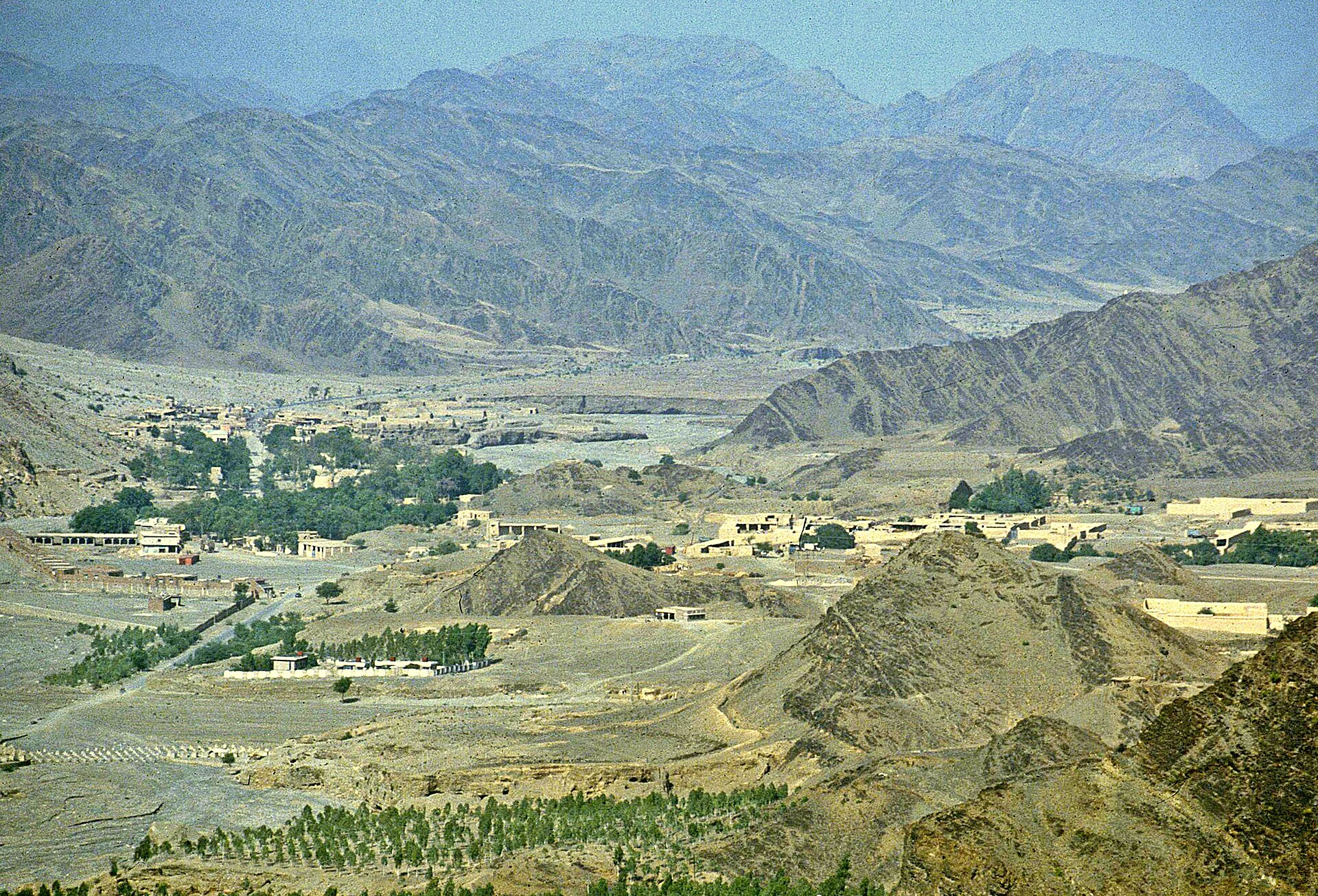
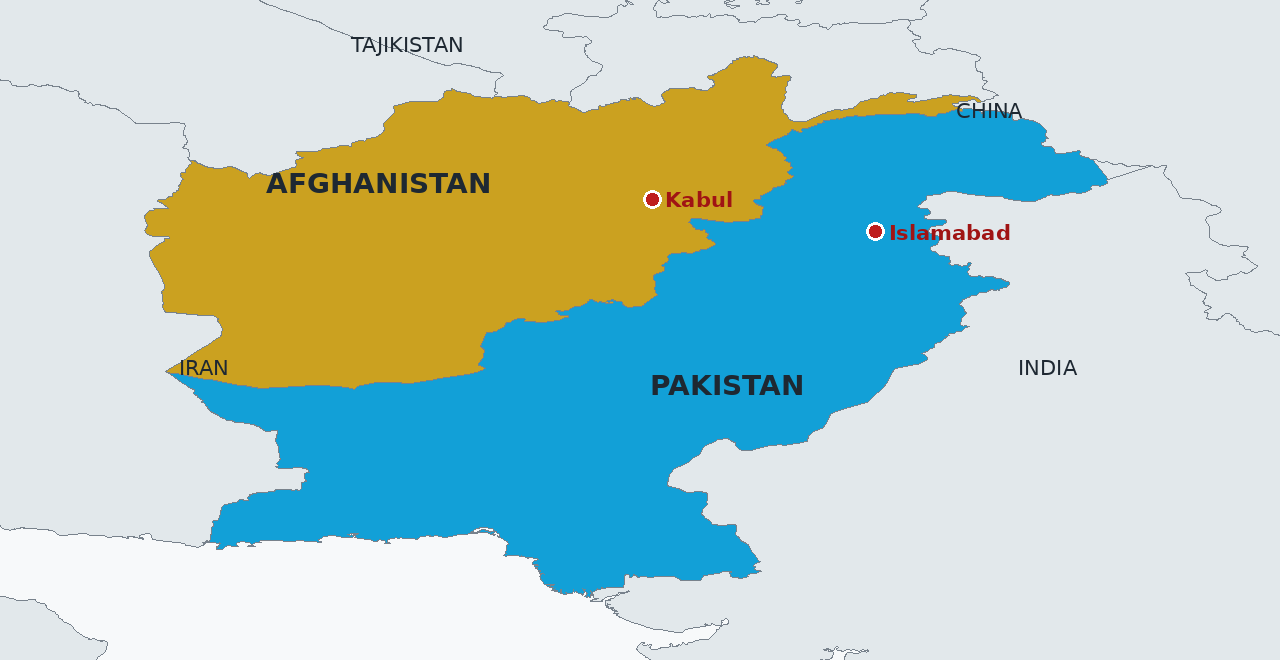
Pakistan and Afghanistan share a border that one side says does not exist, and in September that border became a battlefield. Jets and drones crossed it in both directions, each capital kept its own ledger of the dead, and a second, quieter war ground on in the mountains of the northeast, fought mostly in claims nobody outside could check. None of it started in September. September is when it stopped pretending to be a border dispute and started behaving like a war neither side will name.
It started inside Pakistan. On September 17, a roadside bomb killed six soldiers in Hangu district. A day later, a suicide bombing in Kohat killed sixteen police and fifteen civilians and injured more than a hundred people, the deadliest attack of the month. The Kohat attack was claimed by Ittihad-ul-Mujahideen Pakistan, an alliance led by the Hafiz Gul Bahadur group with close links to the Pakistani Taliban, and Pakistani authorities said one of the attackers was an Afghan national. For Islamabad, that chain of facts points in one direction only: across the line, to the soil it says these groups plan and shelter on.
Pakistan answered on September 21, with its first airstrikes since June, against what it called militant hideouts in Kunar and Paktika provinces. Its information ministry described calibrated, intelligence based strikes on three targets, among them an alleged suicide bombing training centre and a weapons depot, and said 28 militants were killed. Kabul told a different story about the same bombs: a family home in the Nurgal district of Kunar was hit, three members of one family were killed and four people injured. The United Nations mission in Afghanistan confirmed that toll, three civilians, a man, a woman and a girl, and it is the only toll from that night we treat as confirmed here, because both capitals were counting the same strike and reaching numbers that cannot both be true. The Taliban's chief spokesman called the strikes a repetition of crimes and warned of an appropriate response.
The ladder kept going up. On September 23, Pakistan said it had shot down eight drones launched from Afghanistan, a claim Kabul denied, along with alleged mortar fire on Pakistani border posts. The next day came the biggest round yet, air and drone strikes on ten sites across Paktika, Khost and Kandahar, the last of them the seat of the Taliban's supreme leader. Pakistan then said its forces had stopped an attempt by Afghan Taliban fighters to infiltrate the Gulistan sector of Balochistan over September 24 and 25. On September 27, Kabul turned the accusation around: its forces, it said, had killed 41 militants in Nuristan who had crossed from Pakistan, with Pakistani support behind them. Islamabad rejected that charge outright. Read the week carefully and a pattern shows through the claims. Each side now describes the other not as a neighbour failing to police militants, but as a combatant sending men and machines across the line itself.
Underneath every exchange sits the line itself, and the accusation attached to it. The frontier is the Durand Line, drawn in 1893, running for about 2,640 kilometres, and no Afghan government, including the Taliban's, has ever recognised it as an international border. Islamabad's core charge is that the Pakistani Taliban, the TTP, plans its attacks from Afghan soil and that Kabul must act against it. Kabul's answer is that the TTP is Pakistan's internal problem. It denies harbouring militants, and accuses Islamabad in return of sheltering Islamic State linked fighters to destabilise Afghanistan. The pressure behind the argument is real enough on the Pakistani side: its authorities report more than 2,800 militant attacks and 3,000 deaths across Pakistan since January, most of them in the northwest and Balochistan. A state taking losses on that scale will not accept a lecture about restraint for long, and this one has stopped trying to sound as if it might.
There is a second war folded inside the first. Through September, in the northeast, the Afghanistan Freedom Front and the National Resistance Front kept claiming attacks on the Taliban, district after district: Zebak and Yaftal-e-Payeen in Badakhshan, Kamdesh in Nuristan, Nari in Kunar, Faizabad at the end of the month. Every one of those claims is exactly that, a claim, relayed by monitors such as the International Crisis Group and the FDD Long War Journal, and none of it has been independently verified. We carry it for one reason. A Taliban government fighting Pakistan on its eastern border while armed opponents probe its northeastern districts is a government being pulled in two directions at once, and its room to concede anything to Islamabad shrinks with every district it has to defend at home.
October has not cooled any of this. On October 1, Kabul said Pakistani strikes killed nine people and destroyed three houses in Kunar and Helmand, a toll Reuters could not independently verify and on which Pakistan's military did not immediately comment. In the middle of the month the border clashes resumed in several places, including a firefight of nearly four hours in Kurram on October 17. The two countries have been here before, and worse: in October 2025 they fought the heaviest border clashes since the Taliban took power in 2021, then accepted a ceasefire in Doha under Qatari and Turkish mediation and agreed in Istanbul to keep it and to build a way of checking claims. That machinery is what is missing now. The mediators have gone quiet, and the Atlantic Council's Michael Kugelman told Le Monde that the worrying part is not so much the escalation of violence as the failure of mediation, with even China, which has leverage over both, unable to bring them to agreement. Kabul says it still favours dialogue. Its deputy information minister also told Le Monde that even if there is a war, Afghanistan will defend its territory.
Our call is that these strikes have settled into a rhythm, and rhythms like this do not end because one side wins an argument about a line drawn in 1893. Islamabad is not really trying to destroy the TTP with airstrikes. It is raising the price Kabul pays for hosting it, one compound at a time, in the expectation that the Taliban will eventually move against their old allies rather than keep absorbing bombs. That expectation misreads Kabul twice over. The Taliban's leaders owe the TTP a debt from their own insurgency, and a government fighting resistance fronts in its own northeast cannot afford to open a third fight against armed men on its own side of the line. So the more likely path is the one October is already showing: another mass casualty attack inside Pakistan, another round of strikes within days, another set of rival numbers, and no talks until a mediator rebuilds the checking mechanism the two sides agreed in Istanbul last year and then let lapse. Watch Qatar, Turkey and China, not the border posts. The next ceasefire, when it comes, will be announced in one of their capitals, and until it is, the line Kabul says does not exist will keep being drawn in the only language both sides are currently using.
The Briefing
The day's world, market and sport, measured and in your inbox before breakfast. One email, no noise, free while we build it.
Subscribe by emailSubscribing opens your email app with a note to [email protected]. We never share your address.