Washington wants Orban to run the United Nations, and says Moscow and Beijing agree
The Wall Street Journal reports the Trump administration has encouraged Viktor Orban to run for secretary-general as a joint American, Russian and Chinese candidate. None of the three capitals has confirmed it, and Orban will not run unless the win is locked.
New York, United States · October 26, 2026
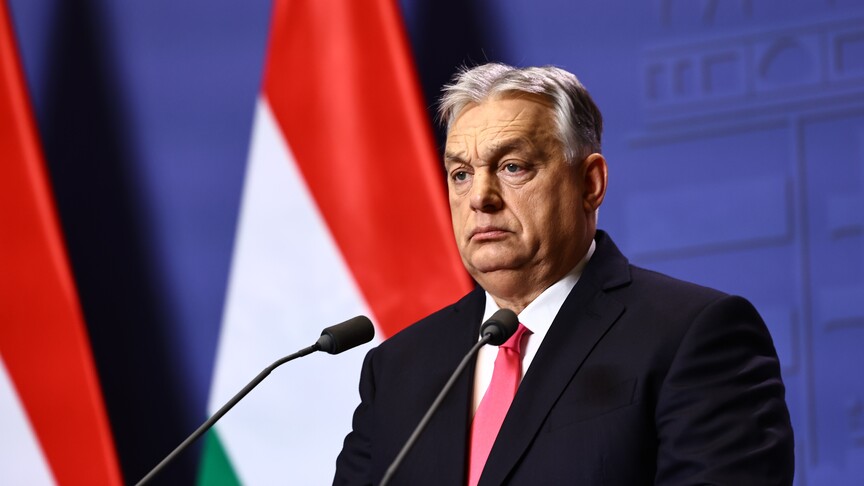
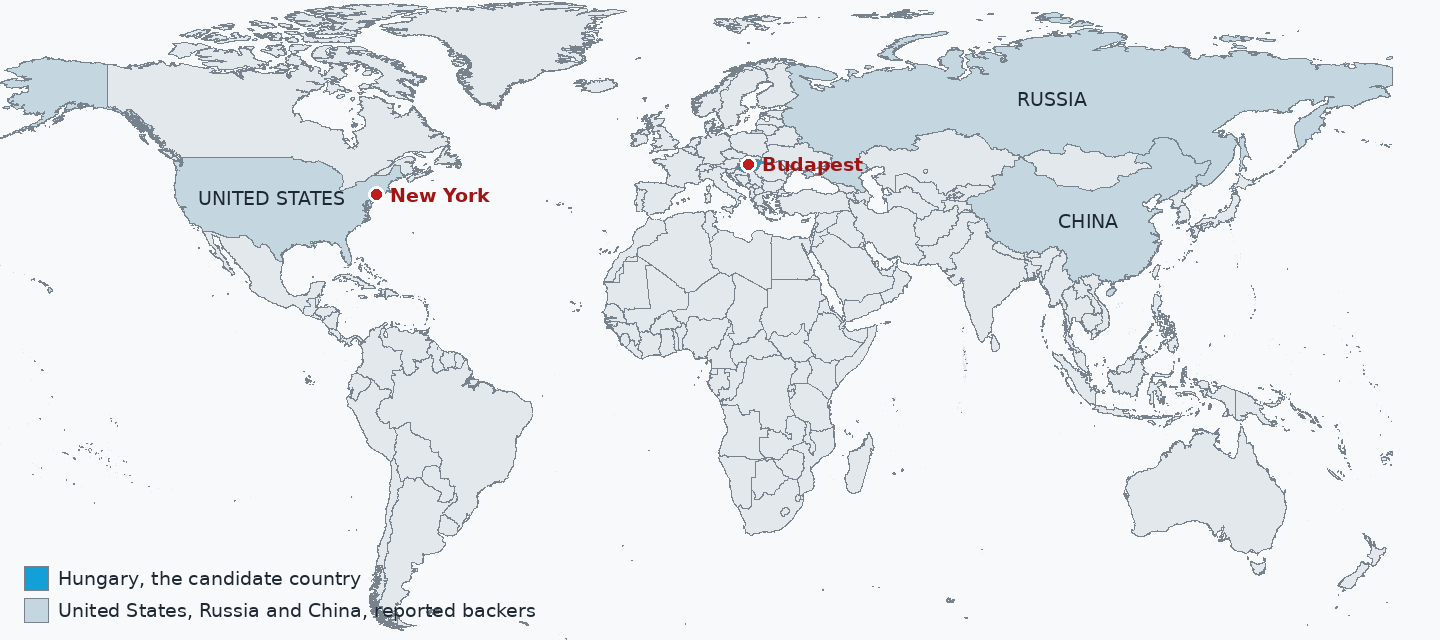
The race to run the United Nations has spent six rounds producing no winner, and into that deadlock Washington has now, by one account, pushed the most unlikely name in European politics. The Wall Street Journal reports that the Trump administration has encouraged Viktor Orban, Hungary's prime minister for 16 years until voters removed him in April, to run for secretary-general as the joint candidate of the United States, Russia and China. The paper's editorial board cited sources in three countries: American officials weighing a successor to Antonio Guterres said they wanted someone like Orban, their Russian and Chinese counterparts agreed, and Washington then approached him directly. Hold the claim at arm's length, though. No final decision has been taken, none of the three capitals has confirmed any of it in public, and Orban himself declined to comment.
The deadlock is the reason a name like his can even enter the room. Reuters reported that the Security Council's sixth straw poll, on October 16, left Costa Rica's Rebeca Grynspan in front with nine encourage votes, but two of her five discourage votes came from permanent members, and every one of the seven candidates drew at least two opposing votes from the five veto powers. A candidate in this system does not need to be loved. He needs to be unvetoed, and nobody in the current field is. Orban, improbably, might be, because he spent his years in office keeping close ties with Donald Trump, Vladimir Putin and Xi Jinping at the same time, a combination no other European leader managed. A State Department official conceded the idea sounds crazy at first, in the Journal's telling, then called Orban the dream MAGA-conservative candidate, pointing to his hard line on migration, his fights with liberal non-governmental groups and his battles with Hungary's courts and press. Another official put the appeal more bluntly: the rest of the field is heavy on secretary, and Orban would be a general.
His circumstances at home give the offer a second meaning. Orban lost power on April 12, when Peter Magyar's Tisza party took a two-thirds majority in parliament, and he remains leader of his Fidesz party in opposition. Since the change of government, Hungarian prosecutors have detained two ministers from his governments, on September 28, as part of a wider corruption inquiry, and Euronews reports the authorities could also examine his own potential involvement in the cases under investigation. Reporting since May has linked his interest in a senior United Nations post to the diplomatic immunity the secretary-general carries, and his spokesperson has previously dismissed reports of a candidacy for deputy secretary-general as fake news. Euronews said it contacted the spokesperson about this report and had not received a response. None of that makes the New York offer an escape hatch in fact, but it does explain why a man out of power might listen carefully to it, and why he would still refuse to enter a race he could lose in public.
The arithmetic being claimed for him is specific, which is what makes the gaps around it easy to see. A State Department official counted eight of the council's 15 votes comfortably for Orban and ten within reach. Nine are needed, with no veto from any permanent member. Britain and France, the two veto holders not in the reported deal, have taken no public position, and the Journal noted both are usually cautious about spending a veto against a council majority. Against that, set what is missing. A candidate has to be nominated by a member state, and no country has publicly offered to put Orban forward. Moscow and Beijing have not confirmed they would back him. Any announcement is reported to be held until after the American midterm elections in November. And the informal rotation of the post points this time to Latin America and the Caribbean, which is part of why Grynspan led the last poll. Guterres leaves office on December 31, so the council has about two months to turn a reported conversation into a nomination, a count and a recommendation.
Our call is that Orban does not take office on January 1, and the condition he has set is the reason. He will reportedly run only if the win is locked, and a lock is exactly what this bid cannot assemble: it needs a nominating state willing to sign its name, two veto holders in London and Paris willing to stand aside for the most divisive figure in the European Union, and a council ready to skip the rotation to Latin America, all on the word of governments that have not yet confirmed the plan in public. One missing piece breaks it, and at the moment almost every piece is missing. But the push still does work even if the candidacy dies on paper. It tells the deadlocked council that Washington, Moscow and Beijing can agree on the kind of leader they want, a political heavyweight rather than a career diplomat, and it puts every current candidate on notice that a consensus name can be manufactured outside the field. Watch for a nominating state, because that is the moment this stops being a trial balloon. Until a capital actually files his name, this is three governments testing whether the others flinch, with Orban, for once, the man waiting to see the count before he moves.
The Briefing
The day's world, market and sport, measured and in your inbox before breakfast. One email, no noise, free while we build it.
Subscribe by emailSubscribing opens your email app with a note to [email protected]. We never share your address.