Two scoreboards in Michigan: the polls say a squeaker, the markets say 70 to 30
Abdul El-Sayed leads Mike Rogers 50 to 48 in the newest Michigan Senate poll, inside the margin of error, yet the prediction markets price the same race at about 70 to 30. The final debate in Detroit explained the gap: this contest has stopped being about two candidates and become a vote on loyalty, to a president or to a constitution.
Detroit, Michigan · October 22, 2026
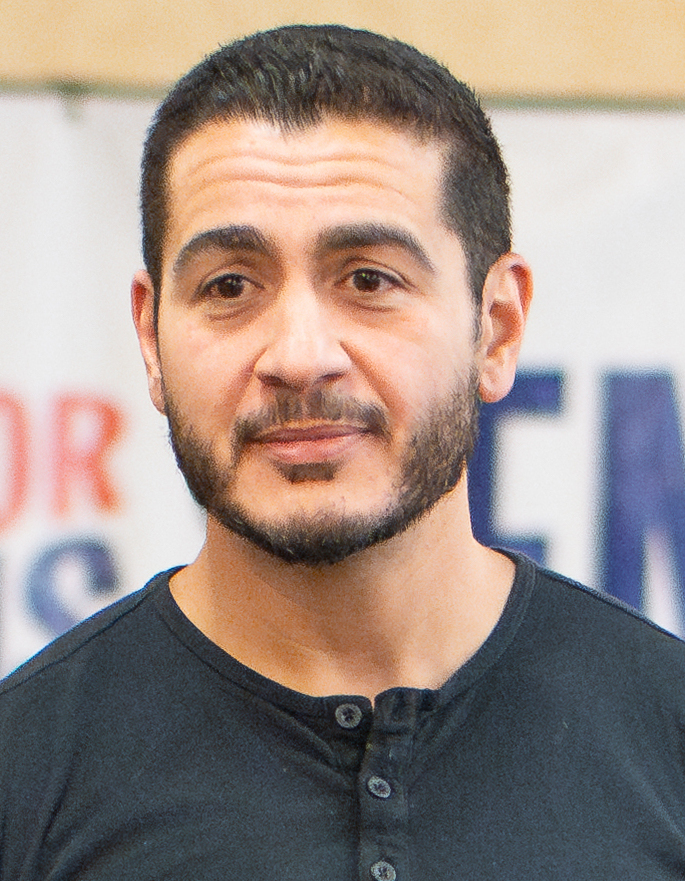
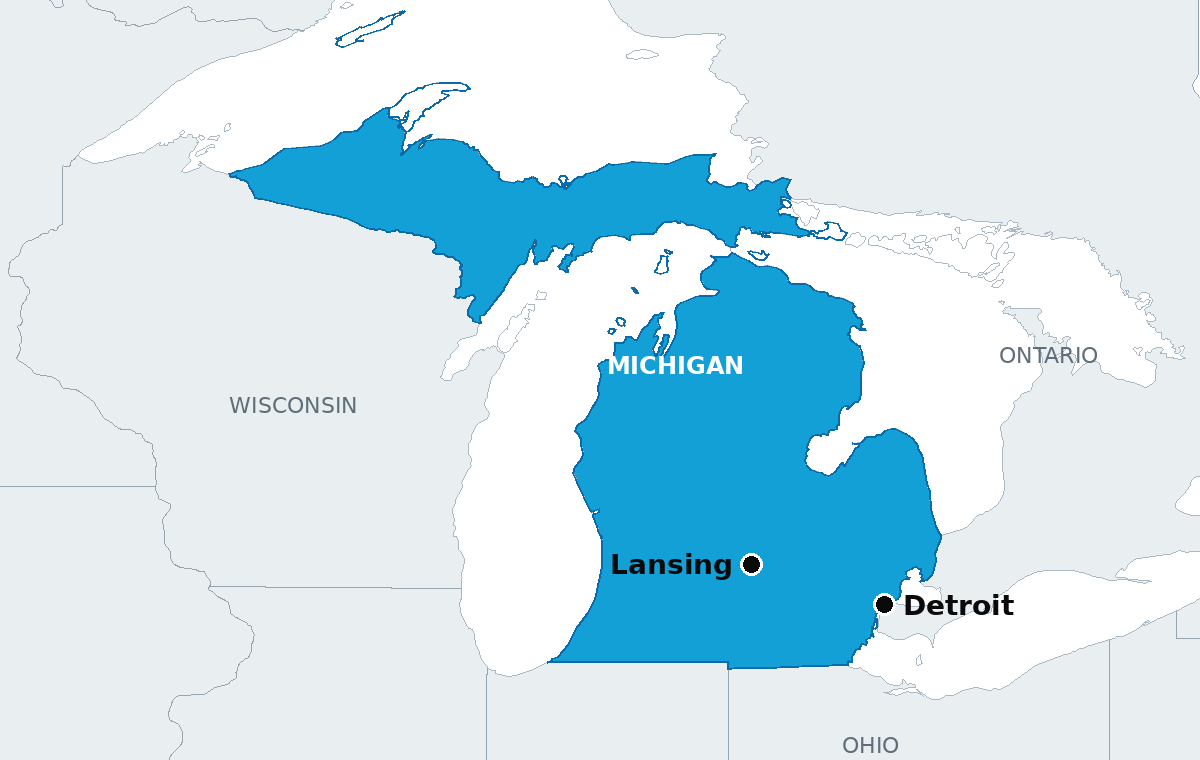
The sharpest moment of Michigan's final Senate debate, in Detroit on Wednesday night, was not about health care, tariffs or jobs. Mike Rogers turned to his opponent and questioned whether Abdul El-Sayed, a Muslim born in Michigan who would be the first Muslim elected to the Senate, is really loyal to the United States, claiming he had been bought off by the Muslim Brotherhood and had donors tied to groups like Hamas and Hezbollah. El-Sayed, who has repudiated the Brotherhood, called the attack shameful and answered with the document both men want to swear an oath to. To bring into question my commitment to the Constitution is really beneath you, he said. I am proud of our Constitution that guarantees all of us the right to pray as we choose to pray.
The seat they are fighting over is open because Gary Peters is retiring, and the stakes run well past Michigan. Republicans hold the Senate 53 to 47, so a Democratic loss here makes a Democratic majority close to impossible, while a hold keeps the path alive. El-Sayed, 41, is a physician and epidemiologist who ran Detroit's health department and later Wayne County's, and he won the August 4 Democratic primary over Representative Haley Stevens by a single point, 48.5 to 47.5, after one of the most expensive primaries in Senate history. Rogers is a former congressman who chaired the House Intelligence Committee, and he comes back with a scar: in 2024 he lost Michigan's other Senate seat to Elissa Slotkin by fewer than 20,000 votes.
Loyalty became the centre of this race because Rogers has stood on both sides of the question he put to El-Sayed. In a Washington Post op-ed on January 5, 2021, Rogers wrote that unfounded stolen election claims rested on conspiracy and hearsay, and that denying the results of certified elections without evidence of fraud was an abdication of the higher responsibility to our Constitution. Of Donald Trump's role in the Capitol riot he said, you are damn right you had responsibility for this, and he called Trump's pressure on Georgia's election official more gangster than presidential. By June 2024, asked by the Detroit Free Press editorial board whether Joe Biden had won the 2020 election, he declined to answer directly. This year, minutes after a Trump speech repeating fraud claims, including a debunked claim about Michigan ballots, Rogers posted that he was thankful for President Trump's commitment to transparency, and he has suggested, on an unproven claim about late arriving Detroit ballots, that voting irregularities cost him the 2024 race. Trump, for his part, has given Rogers his complete and total endorsement.
El-Sayed's whole closing argument builds on that record. He told CNN on October 20 that Mike Rogers is simply a rubber stamp on what Donald Trump wants, and the debate gave him the stage to say it to Rogers directly. The honest complication is that Rogers has broken with Trump in public in recent weeks, in ways a pure rubber stamp would not. He has released an ad calling for an immediate end to the tariff war with Canada, Michigan's largest trading partner, after months of defending the tariffs, and he has called for Trump's war with Iran to end quickly as a way to bring down fuel prices. Neither break names the president. Both tell you Rogers can read a Michigan poll, and what he reads there is a president whose approval in the state sits at 42 percent against 57 percent disapproving in the newest Marist survey, where 44 percent of likely voters say their vote is mainly a vote against Trump and only 18 percent say it is a vote for him.
That is the backdrop to the two scoreboards, and they really do say different things. The newest poll, from Marist, taken October 15 to 18 among likely voters with a margin of error of 4.3 points, puts El-Sayed ahead 50 to 48. Rasmussen Reports, October 12 to 14, had it 46 to 44. InsiderAdvantage had it 48 to 46, YouGov 49 to 48. The averages sit in the same narrow band, El-Sayed up 2 points on PollingSource and about 2.6 on RealClearPolitics, and no poll since an early September Detroit News survey has put Rogers in front. The prediction markets take that same evidence and price it far more bluntly. On Kalshi, El-Sayed trades at 69 cents to Rogers at 31, with more than 11.5 million dollars traded on the race. On Polymarket he stands at 70 percent to 30, on 2.1 million dollars of volume. Kalshi itself points out the bridge between the two readings: traders there are pricing a winning margin of roughly El-Sayed plus 2.3 points, almost exactly what the polls show. A small lead that never flips direction stops looking like a coin toss, because the chance that every poll has the same man ahead by accident gets smaller with each new survey.
What remains is turnout, and twelve days of it. Wednesday's debate was the last time the two men share a stage. Early in-person voting opens across most of Michigan on Saturday, and the contest now turns on who actually shows up: the younger and urban voters who give El-Sayed his biggest margins, or the rural and older voters who nearly carried Rogers over the line in 2024. Marist gives El-Sayed independents by 50 to 44, the group most likely to decide a two point race in a state that has made a habit of them. Rogers's late breaks on Canada and Iran are aimed at exactly those voters, an attempt to show daylight between himself and the president without ever saying the president's name, because the base he cannot afford to lose is still Trump's.
Our call is that El-Sayed holds on and wins narrowly on November 3, by something close to the two points the polls keep repeating, and that the loyalty argument is the reason Rogers cannot quite close the gap. A challenger who needs to look independent has one problem no ad buy can fix: the most quoted words in this race are his own, written in January 2021, and every voter Rogers now asks to trust his judgment on elections has to square the man who wrote them with the man who thanked Trump for transparency this year. His Canada and Iran breaks show he knows the president is a drag in Michigan, but a break that dares not name what it breaks from reads as calculation, not conviction, and voters in a state this closely divided tend to punish calculation they can see. The markets are not calling a landslide. They are calling a consistent two point lead for what it is, the most durable kind of lead there is in a race this late, and we think they have the better of the argument over the coin toss label.
The Briefing
The day's world, market and sport, measured and in your inbox before breakfast. One email, no noise, free while we build it.
Subscribe by emailSubscribing opens your email app with a note to [email protected]. We never share your address.