Eight ministers in one room: Istanbul draws a public line against a new attack on Iran
Turkey, Egypt, Pakistan and Saudi Arabia sat down with France, Germany, Britain and Italy for the first time on Friday, and told Washington and Israel that a fresh strike on Iran would only widen the war. The plans they were answering wait on the other side of the US elections.
Istanbul, Turkey · October 23, 2026

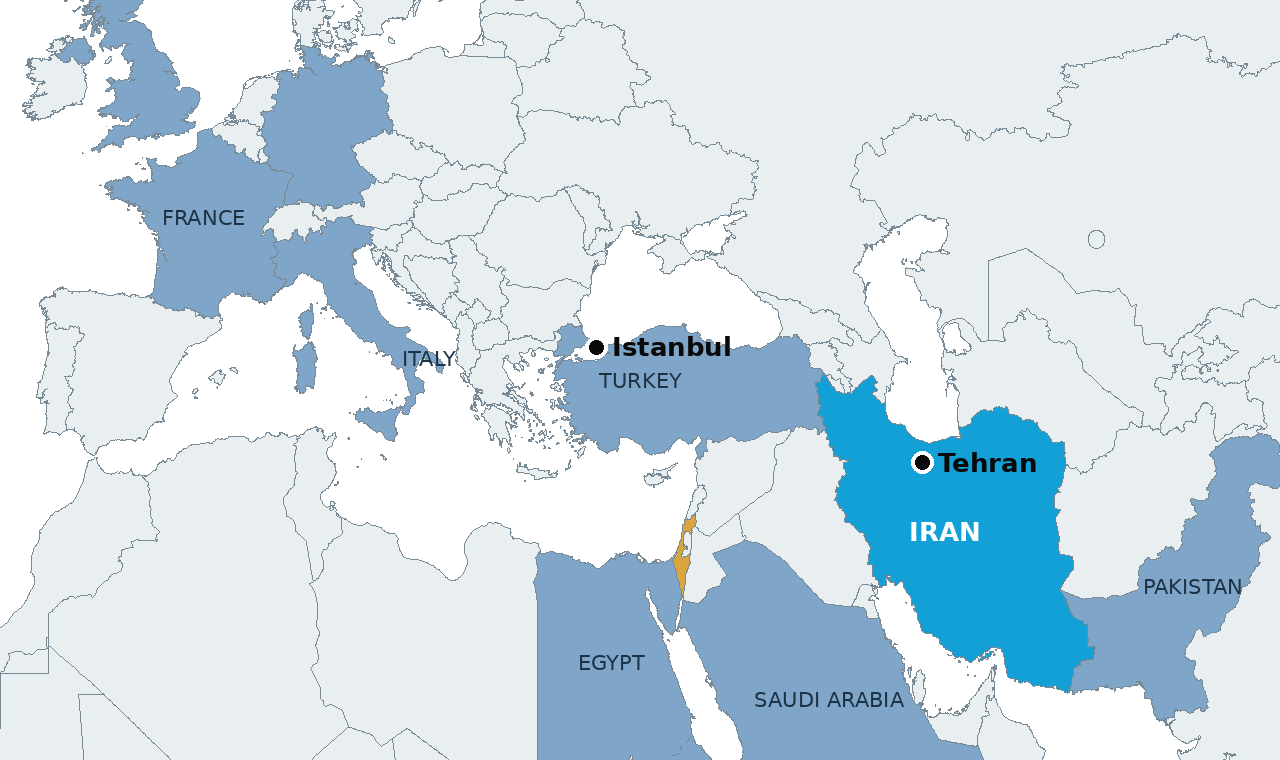
Eight foreign ministers do not fly into the same city by accident. On Friday they came to Istanbul, four from the region and four from Europe, and sat down together in this format for the first time. Turkey's Hakan Fidan hosted his counterparts from Egypt, Pakistan, Saudi Arabia, Germany, France, Britain and Italy, and when the meeting ended he said the quiet part in front of the cameras. A new attack on Iran, the room had agreed, would only expand the war.
The plans they were answering had surfaced two days earlier. The New York Times reported on Wednesday that the American and Israeli militaries have drawn up specific plans for renewed strikes on Iran, timed for after the US midterm elections next month, with likely targets running from energy sites to the nuclear programme and the missile and drone stockpiles behind it. Planning is not the same as a decision, and no order has been given. But plans of that detail, briefed to a newspaper, are a message in themselves, and Istanbul was the reply.
Fidan did not soften his side of it. A military intervention in Iran is not in any way a solution, he said, and nobody in the room approves one at the moment. Diplomacy and dialogue, he added, are the only way the six month old war ends. France's Jean-Noel Barrot put a price on the alternative: a renewed escalation between Iran and the United States would leave only losers, and push oil prices higher. Germany's Johann Wadephul then offered Tehran the other door, saying Germany, France and Britain stand ready to negotiate with Iran to rule out it ever acquiring a nuclear weapon, while calling for support for Saudi Arabia and Yemen.
That pairing is the shape of the thing. The eight were not only warning Washington. They were sketching the trade they would rather see: no new strikes from one side, a negotiated cap on the nuclear programme from the other, and the Houthi attacks on Saudi Arabia, which the ministers also discussed alongside Russia's war in Ukraine, pulled down with the temperature. Turkey is built for this role and knows it. A NATO member in close contact with Washington, Tehran and the regional mediators, it has spent the war calling for the attacks to stop and warning against exactly the wider fire it now sees being planned.
What the room cannot do is set the clock. Donald Trump holds that. Earlier this month he said the United States would not attack Iran before the midterms, pointing to talks with Tehran he called productive, and on Friday he said America could end the war quickly if it chose, while questioning whether a swift end is even what Washington should want. So the strike plans sit in their folder until the elections pass, the Istanbul warning sits on the record beside them, and the weeks between now and that vote are the only negotiating time anyone has actually been given.
Our call is that the Istanbul line delays an attack more than it prevents one, and that the delay is the achievement. Eight governments, including three that would have to live with the oil shock and two that border the fallout, have now made a public strike politically more expensive for Washington than a private warning ever could, because breaking a line drawn in the open costs more than ignoring advice given in private. Whether the weeks get used is the test: if the European three open their channel to Tehran before the midterms, Istanbul becomes the start of an off ramp. If nothing moves by election day, it was a photograph of eight ministers agreeing with each other while someone else decided.
The Briefing
The day's world, market and sport, measured and in your inbox before breakfast. One email, no noise, free while we build it.
Subscribe by emailSubscribing opens your email app with a note to [email protected]. We never share your address.