A missile claim at Saudi Arabia's biggest refinery, and oil moved before anyone confirmed it
Yemen's Houthis say they hit the 550,000 barrel a day Ras Tanura plant with a ballistic missile. Saudi authorities had not confirmed the strike as Brent rose 1.8 percent to 115.90 dollars and Gulf stocks slid.
Ras Tanura, Saudi Arabia · October 28, 2026
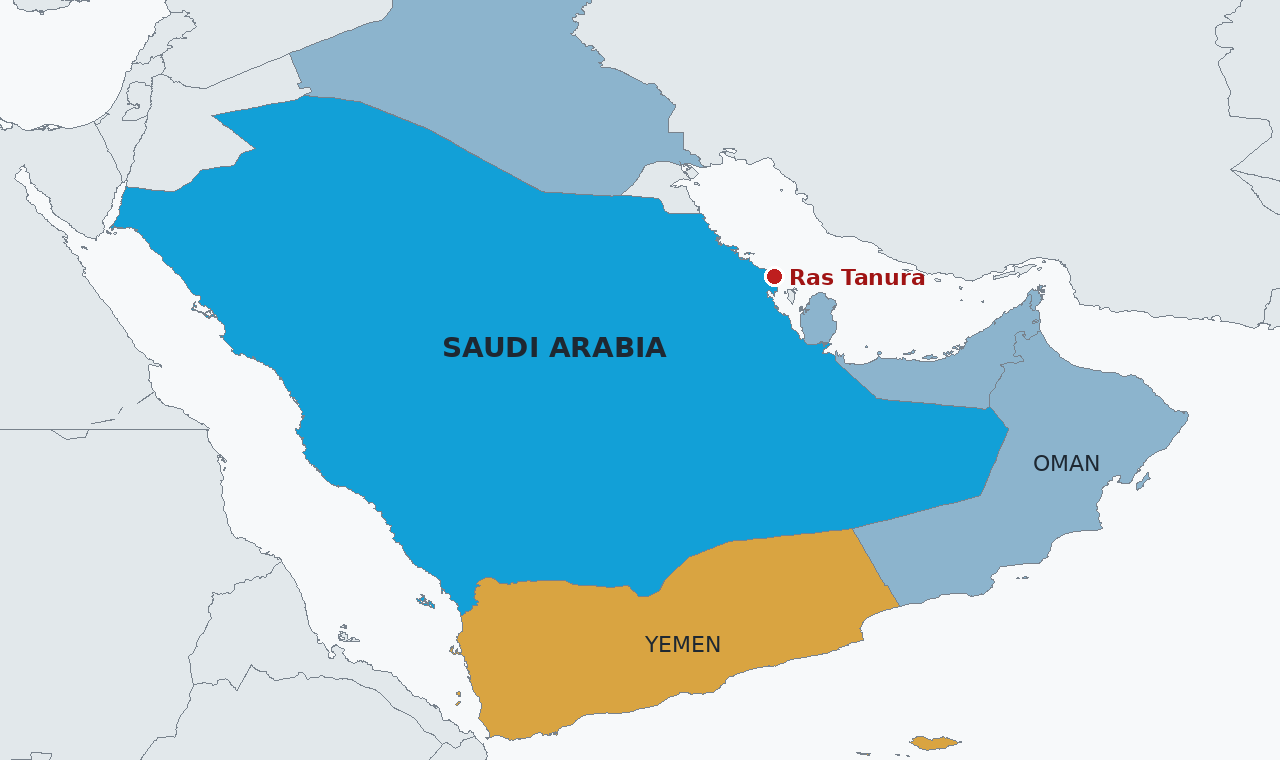
The claim landed on Tuesday, and the market did not wait for proof. Yemen's Iran aligned Houthis said they had struck Ras Tanura, Saudi Arabia's biggest refinery, with a ballistic missile. The plant handles 550,000 barrels a day on the kingdom's Gulf coast, in the country that exports more crude than any other. By early trade on Wednesday Brent was up 2.02 dollars, or 1.8 percent, at 115.90 dollars a barrel, after an earlier rise of 1.3 percent to 115.36 dollars in Asian hours. Saudi authorities had not immediately confirmed that any strike had happened at all.
That gap between claim and confirmation is the story traders were actually pricing. A day earlier, prices had fallen nearly 2 dollars as talks in Tehran, where Saudi, Turkish and Pakistani officials met Iranian officials on Monday, eased worries about supply. One unverified claim reversed the mood in hours. Gulf stocks followed oil's nerves rather than its gain: the Saudi benchmark fell 1.3 percent, with Aramco itself down 1.3 percent, Dubai fell 0.5 percent and Abu Dhabi fell 1 percent. When the risk is to the region's own plants, a higher oil price reads as danger first and revenue second.
Why a single refinery matters this much is simple geography. Ras Tanura is not one plant among many in a diversified system. It is the biggest refinery in the biggest crude exporting country, sitting on a coast where a large share of the world's traded oil loads onto ships. A real, sustained outage there would not just lift prices for a morning. It would force buyers to bid for replacement barrels in a market already tight enough that a rumour can move Brent by two dollars before breakfast in Europe.
What happens next depends on a fact that is still missing. If Riyadh confirms damage, the question becomes how long repairs take and whether the Houthis can repeat the strike, because a plant that can be hit once can be threatened again. If Saudi Arabia says nothing was hit, or that a missile was intercepted, prices will likely give back much of the rise, as they did in reverse after the Tehran talks. Either way, the Houthis have already shown they can set the oil price for a day with a statement, which is a cheaper weapon than the missile itself.
Our call is that the lasting move here is not the 1.8 percent rise, it is the speed of it. Markets used to wait for smoke, damage reports or an official statement before pricing an attack on energy infrastructure. Now a claim from the group that says it fired the missile is enough, because traders know confirmation, if it comes, will arrive after the price has moved. That gives the Houthis, and any group watching, a standing incentive to claim strikes on oil facilities whether or not every claim checks out. Watch Riyadh's wording, not just Brent. A flat denial settles this episode. Silence, stretched into a second day, tells you the claim landed closer than Saudi Arabia wants to say.
The Briefing
The day's world, market and sport, measured and in your inbox before breakfast. One email, no noise, free while we build it.
Subscribe by emailSubscribing opens your email app with a note to [email protected]. We never share your address.