A quarter of China's Central Committee never showed up, and the empty chairs are the story
Of the 376 members named in 2022, only 279 attended the Fifth Plenum, the highest absence rate of the post-Mao era. The plenum confirmed 33 expulsions and promoted the general who ran the military purges.
Beijing, China · October 29, 2026
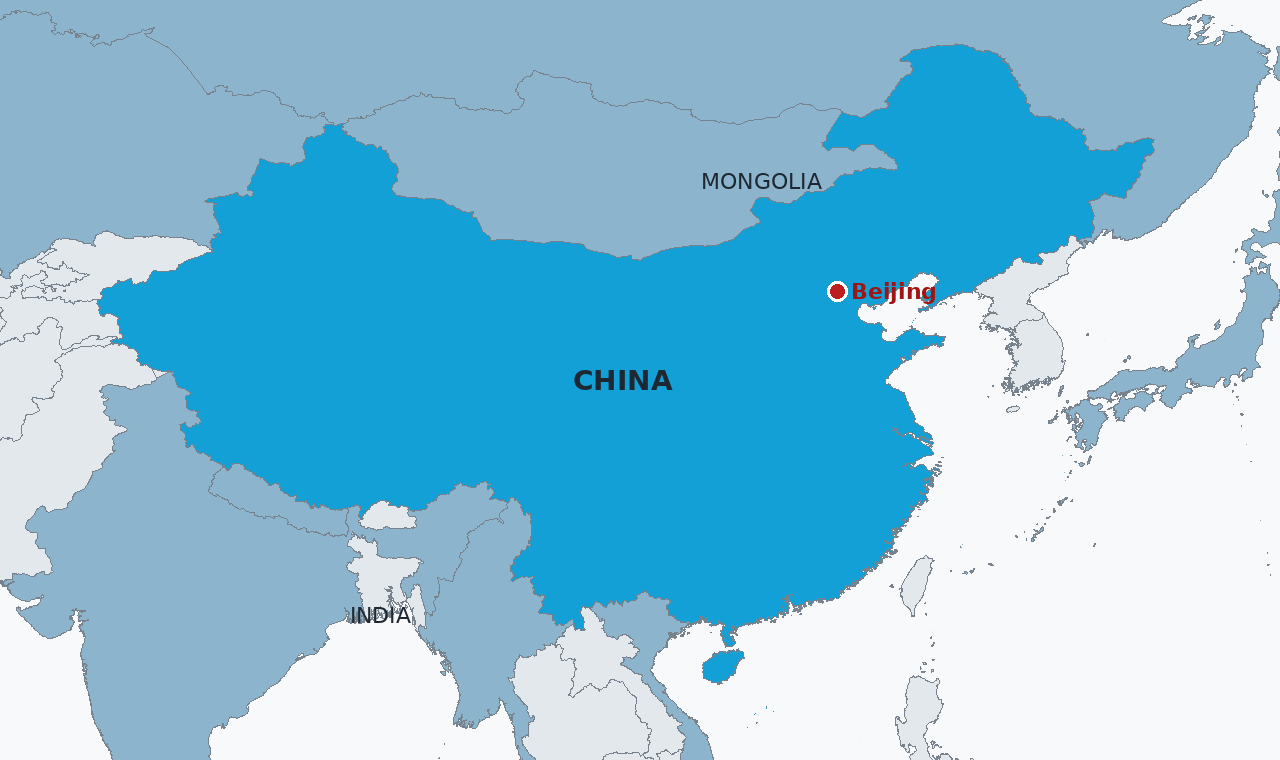
Plenums are supposed to be the dullest events in Chinese politics, hundreds of senior officials in one room ratifying decisions already taken. This one is worth reading for who was not in the room. Of the 376 men and women named to the Central Committee in 2022, only 279 attended this week's Fifth Plenum. That is an absence rate of about a quarter, the highest of the post-Mao era, and in a system that treats attendance as a loyalty signal, every empty chair is a small announcement.
The plenum made the arithmetic official. It confirmed the expulsion of 33 officials, among them former Politburo member Ma Xingrui, senior military leader Zhang Youxia, diplomat Liu Jianchao, industry minister Jin Zhuanglong and securities regulator Yi Huiman. That spread tells its own story: the party apparatus, the military, foreign policy, industry and finance all lost senior names in the same purge cycle. Li Yunze was removed from his party post, and in the other direction, General Zhang Shengmin, the officer who oversaw the military purges, was elevated into the Politburo. The man who ran the removals got promoted at the meeting that ratified them.
Why a leadership does this to its own elite comes down to the calendar. The plenum set the 21st Party Congress for the second half of 2027, the meeting that will define the next leadership term. Anti-corruption is the stated reason for every expulsion, and corruption is real in the system, but a purge of this breadth, landing this close to a congress, also clears the room: officials whose loyalty is doubted, whose networks belong to other patrons, or whose failures might embarrass the top are gone before the seating plan for 2027 is drawn. Analyst counts from Brookings and The Times, working the same attendance lists, land on the same scale of removals, which is why the numbers have travelled: they are drawn from the party's own published record.
The risk in governing this way is the one nobody at the plenum will name. A Central Committee missing a quarter of its named members is a thinner bench, and the officials who remain have watched colleagues fall across every major portfolio at once. That produces caution, and caution in a bureaucracy this size means decisions slow down, bad news travels upward more slowly, and local officials wait for signals instead of acting. The military expulsions carry the sharpest version of that risk, because readiness depends on commanders who believe initiative will be rewarded rather than investigated.
Our call is that the purge cycle is closer to its end than its beginning, precisely because the 2027 congress is now dated. A leadership still mid-purge does not fix the congress date and promote its chief enforcer in the same week; it does those things when the room is nearly finished being cleared and the next phase, filling the seats, is about to start. Watch the appointments that follow over the next two quarters, especially in the military and the financial regulators, because those names, not the expulsions, will show what this was all for: who the leadership trusts to run the system it has just spent years cutting down.
The Briefing
The day's world, market and sport, measured and in your inbox before breakfast. One email, no noise, free while we build it.
Subscribe by emailSubscribing opens your email app with a note to [email protected]. We never share your address.