Burkina Faso is being squeezed, and its two jihadist enemies are now killing each other
JNIM spent September hitting the army from the west, the north and the tri-border. Then it ran into Islamic State Sahel, which claims it killed hundreds of JNIM fighters in the northeast. Captain Traore answers from the capital with a new constitution and tighter rules, while nearly four million people across three countries have been driven from their homes.
Ouagadougou, Burkina Faso · October 27, 2026
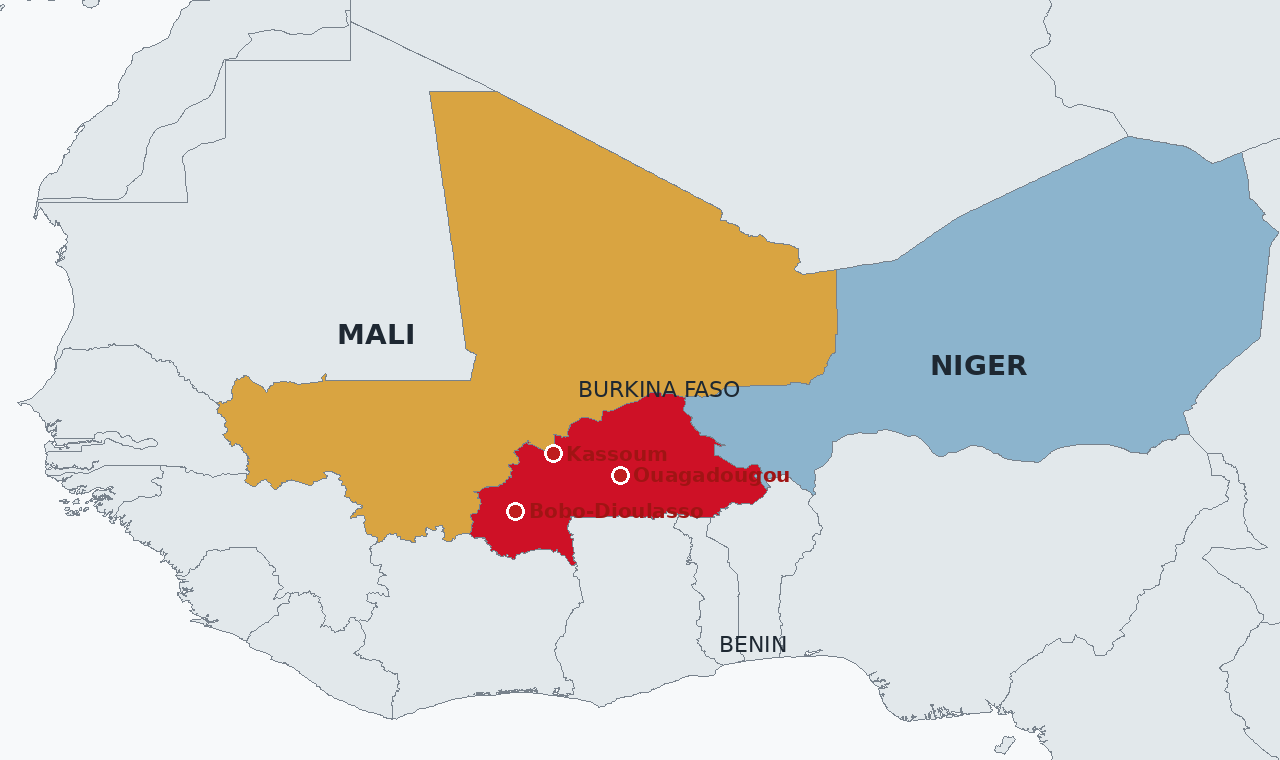
September is the month to look at, because it shows the squeeze in one frame. JNIM, the al Qaeda branch in the Sahel, spent the month hitting the Burkinabe army and the civilian auxiliaries who fight beside it. On September 9 its fighters reportedly overran the detachment at Kassoum, in the west. Days later it claimed posts seized at Kokorowe, outside Bobo-Dioulasso, the second city, and at Aorema, near Ouahigouya in the north, while its corridors from Mali and the tri-border pressed on the army's own supply roads. On September 25 it claimed more positions again. None of that is a single offensive with a name. It is pressure from several directions at once, and pressure is harder for a stretched army to answer than a battle it can point to.
Inside that pressure sits a second war, and it may be the bloodier one. Near Kacham, on the Mali border, JNIM ran into its rival, Islamic State Sahel Province, in early September. Islamic State claimed on September 10 that it had killed more than 200 JNIM fighters in northern Burkina Faso. JNIM admitted dozens of its own dead and called the figure exaggerated, and both numbers should be read as claims, not counts. October then got worse. Fighting from October 9 in Oudalan province, in the far northeast, with Arbinda and Tessit in Mali also named, drew initial monitoring reports of about 60 fighters killed, roughly 50 of them from JNIM. On October 12 Islamic State claimed more than 400 JNIM fighters killed, including leaders. Nobody has verified that toll, and an ACLED analyst put the point plainly in the reporting around it: if it were confirmed, it would be the deadliest single battle recorded between the two groups. UN experts had already told the Security Council in early August that these clashes were the most intense direct confrontation anywhere in the world between an al Qaeda branch and an Islamic State linked group.
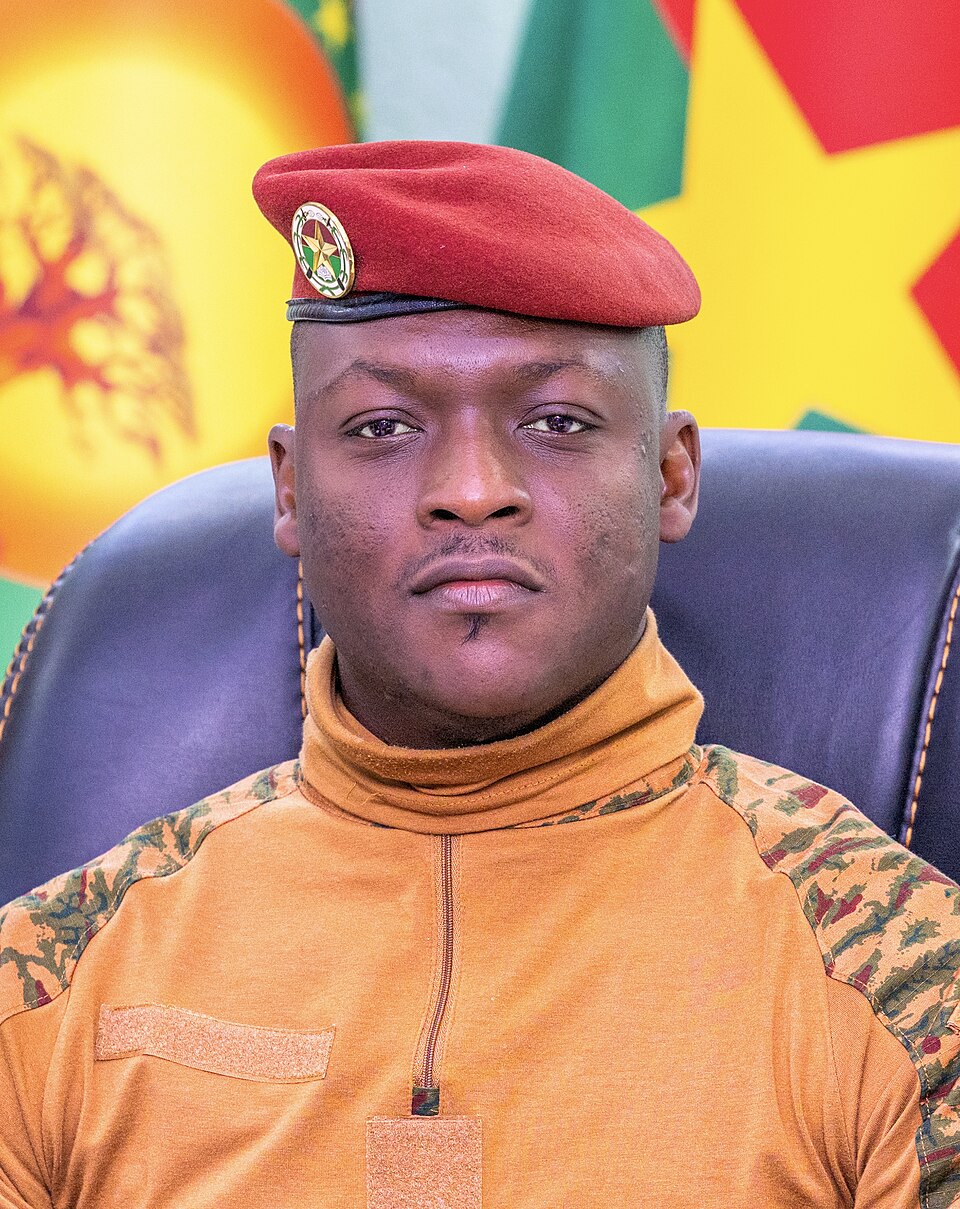
In Ouagadougou, Captain Ibrahim Traore answers with control at the centre. On September 27 he announced plans for a brand new constitution, with no timetable attached, in a televised interview marking four years in power. Days earlier, on September 24, his government adopted decrees that tell aid groups to put at least 80 percent of their budgets into field operations or lose their status, with a two year window to comply. The grip tightens where the state is strongest while it loosens where the state is thinnest, and the human cost of that looseness keeps surfacing in small, grim details. A Spanish national, Juan Mirales Gomez, disappeared from Bobo-Dioulasso on September 4. His whereabouts were still unknown through late September, the latest name in a long pattern of hostage taking that the reporting records without resolution.
None of this stops at Burkina Faso's border, which is why the map matters more than any single attack. Where Mali, Niger and Burkina Faso meet, the fighting now runs as one system. All three countries are run by juntas bound into the Alliance of Sahel States, with a joint force of 5,000 formally stood up at Bamako in December 2025 and Russian Africa Corps troops in the places where France and the United Nations used to be. France has completed its withdrawal from the Sahel states and the UN mission in Mali closed at the end of 2023. The war is also pushing south, into northern Benin and Togo, and about 82,000 Burkinabe refugees had crossed into Cote d'Ivoire by June 2026. Across the three countries the UN counts nearly four million people driven from their homes, 3.8 million by July 2026 including more than 818,000 refugees and asylum seekers. Burkina Faso alone counted 2,062,534 internally displaced people at the end of 2025.
Our call is that the jihadist civil war buys Traore time, but it does not buy him back the countryside, and how he spends that time is the tell. A government that used a breathing space to reopen supply roads, protect the towns JNIM keeps probing and let aid reach the displaced would be treating the rival fight as a window. A government that uses it mainly for a new constitution with no timetable and tighter rules for aid groups is treating it as cover. On the September record, it is the second. That leaves a bleak logic in place: JNIM and Islamic State can bleed each other in Oudalan for months without either one losing the ability to squeeze the state elsewhere, because their fight is over who leads the insurgency, not over whether it continues. Watch Oudalan and the roads west from Ouagadougou together. If the army cannot move more freely while its enemies are busy killing each other, the squeeze has not eased at all. It has only changed hands.
The Briefing
The day's world, market and sport, measured and in your inbox before breakfast. One email, no noise, free while we build it.
Subscribe by emailSubscribing opens your email app with a note to [email protected]. We never share your address.