Lula beats the son as well: a fourth term, won from behind
Three weeks ago Flávio Bolsonaro won the first round. On Sunday night, with 99.3 percent of polling sections counted, Lula took the runoff 51.75 percent to 48.25, beating a second Bolsonaro four years after the first. He inherits a country split down the middle and a Congress his opponents built.
Brasilia, Brazil · October 25, 2026
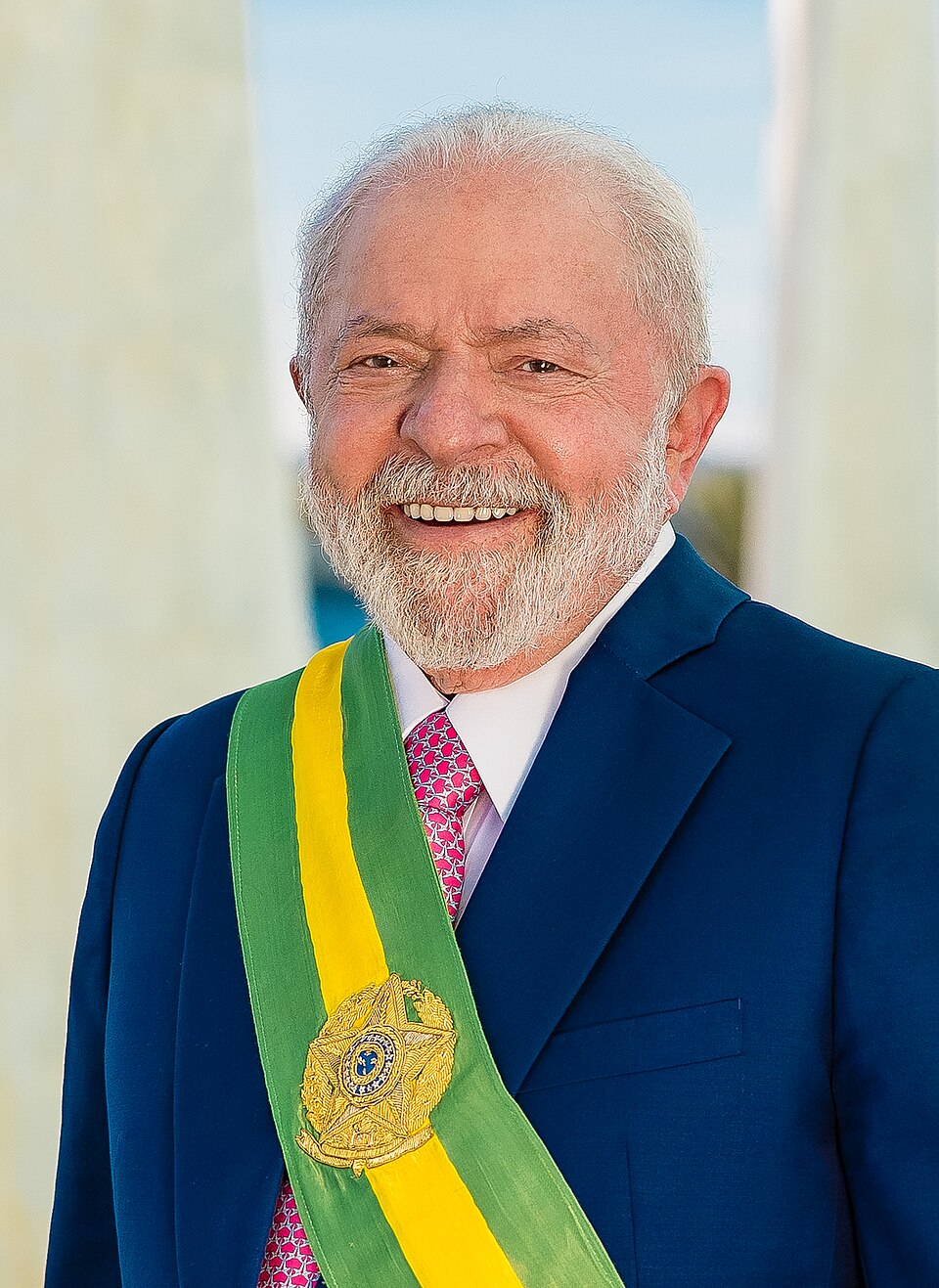
The revenge tour ended on Sunday night in the place it was always most likely to end: the northeast. Luiz Inácio Lula da Silva, eighty years old, a former metalworker who has now won the Brazilian presidency four times, beat Senator Flávio Bolsonaro in the presidential runoff, four years after beating Flávio's father in the same contest. The electoral authority confirmed the result on a count that had swung back and forth all evening. With 99.3 percent of polling sections counted, Lula held 51.75 percent of the valid vote to 48.25 for Flávio Bolsonaro, 63.8 million votes to 59.5 million, a margin of about 4.3 million that the remaining sections could not close. Datafolha projected Lula the winner when about three quarters of the sections had reported. Turnout was 80.8 percent.
The comeback is the first fact of the night. In the first round on October 4, Flávio Bolsonaro finished ahead, 47.03 percent to 45.16, a gap of 2.2 million votes and the closest first round Brazil has ever had. Lula spent three weeks as the man chasing the race, running on the cost of living: pay rises above inflation, debt relief, free buses at weekends, an end to the six day week. Flávio ran on crime, on food prices of his own, and on one promise that hung over the whole campaign, a pardon for his father. Jair Bolsonaro watched the runoff from house arrest, sentenced to twenty seven years for plotting to overturn the 2022 election he lost to Lula, and barred from office since 2023. A Flávio victory would have opened the road to that pardon. The road is closed now.
Election day itself nearly became the story. At the moment polls were due to close, Supreme Court Justice Cristiano Zanin ordered voting extended by two hours, after requests citing public transport failures in three cities in Bahia and heavy rain elsewhere, with both campaigns asking for more time in different places. Stations already shut stayed shut, open ones kept receiving voters, and the electoral court paused the count for about two hours. Early in the count Flávio led, before the northeast reported in force and Lula passed him for good. Reuters noted before the result that the contest threatened to be overshadowed by legal disputes over the extension, and by the time the outcome was settled Flávio's camp was fighting the ruling rather than conceding the race.
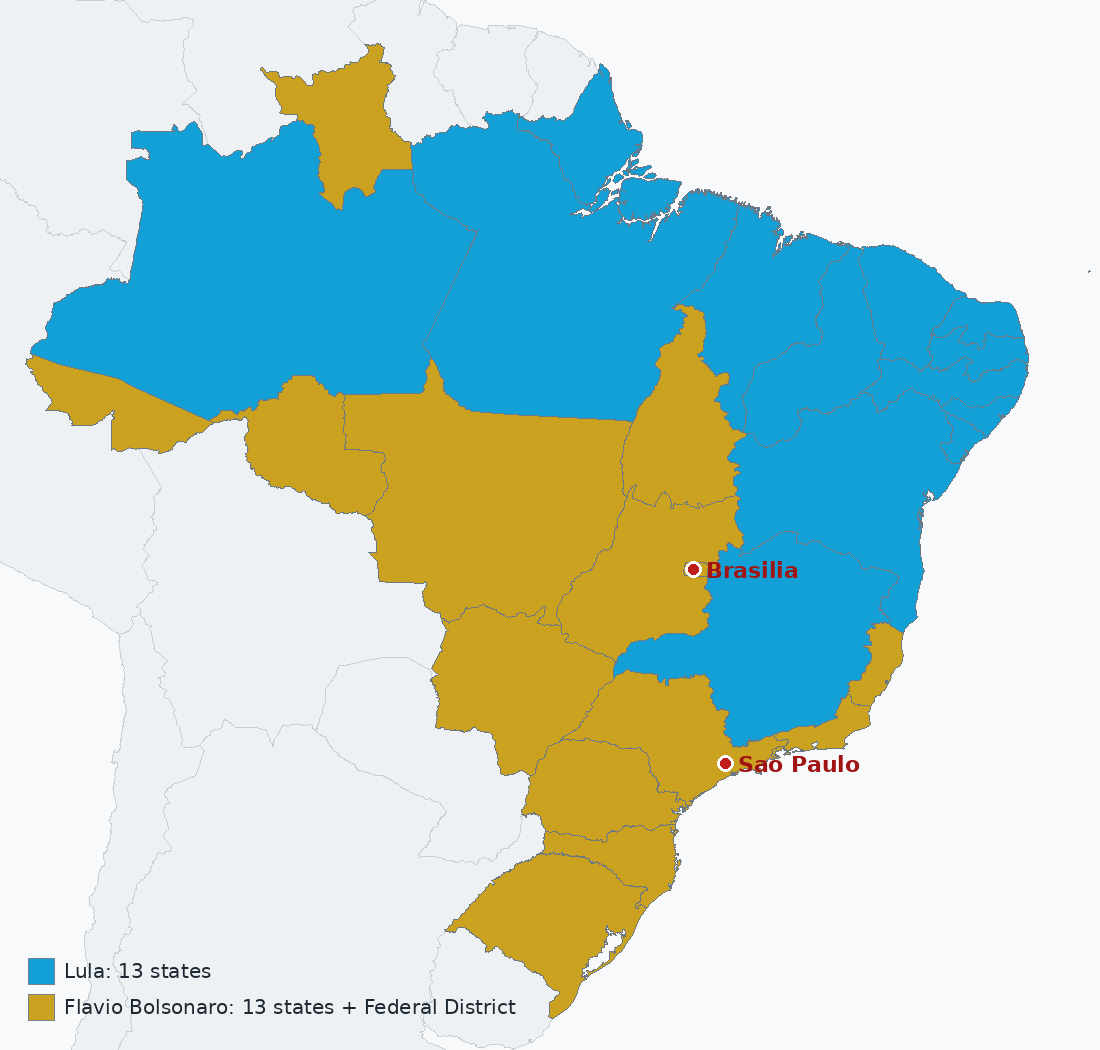
The map explains the result better than the national numbers do, because Brazil voted as two countries. The northeast went for Lula in all nine states, some by margins that decided the presidency on their own: Piauí by about fifty two points, Bahia by about forty two. The Amazon split, with Pará, Amazonas and Amapá for Lula and the frontier west heavily for Flávio. The centre west and the south went Flávio's way, and so did São Paulo, the biggest state of all, and Rio de Janeiro. The closest fight was Minas Gerais, the state that has backed every president since 1989. Lula flipped it by less than one point after losing it in the first round. Count the units and Flávio actually won more of them, fourteen to thirteen. Count the people and Lula won the presidency. His wall was the northeast, and it held.
Here is the catch, and it is a large one. Lula won the presidency while his side lost almost everything else. In the first round, Flávio's Liberal Party became the biggest party in both houses of Congress, taking 121 of 513 seats in the Chamber of Deputies and building a bench of 28 of 81 senators, with right leaning parties holding the Senate outright. The party won five governorships in the first round, and six more governorships were settled in runoffs on Sunday night. So the fourth Lula term opens against a Congress constructed by his opponents, in a country where Washington cheered openly for the Bolsonaro camp, where China is the biggest customer, and where his promise of zero deforestation runs straight into a legislature that answers to the farm belt. What decided the presidential race, above every argument about courts and constitutions, was the price of food, and prices are the one promise a hostile Congress can make very hard to keep.
Our call is that this victory is personal before it is structural, and the difference will run the next four years. Lula's mandate rests on two things that do not automatically renew themselves: the northeast voting as a wall, and grocery bills hurting less than they did. With Congress against him, expect the early term to be built out of measures legislators cannot easily vote down, cost of living relief and pay first, while the deforestation pledge and tax reform become slow fights he may only partly win. Flávio Bolsonaro, meanwhile, takes 59.5 million votes home with him and with them the leadership of the Brazilian right, a leadership his father's legal fate now hangs off, because with the pardon road closed, Jair Bolsonaro's future runs through the courts his son spent the campaign attacking. The transition runs to January 5, when Lula takes the sash for the fourth time. Brazil has chosen the old man over the dynasty. Governing a country this split, with the other side holding Congress, is the harder election, and it starts now.
The Briefing
The day's world, market and sport, measured and in your inbox before breakfast. One email, no noise, free while we build it.
Subscribe by emailSubscribing opens your email app with a note to [email protected]. We never share your address.