Algeria is sending soldiers abroad for the first time since 1973, to guard the energy it cannot guard from home
Parliament voted on Sunday, the presidency announced it on Monday: Algerian army units are going to Madama in northern Niger to protect oil facilities and a gas pipeline route, at Niger's request. A country that built its foreign policy on never intervening has just intervened.
Algiers, Algeria · October 27, 2026
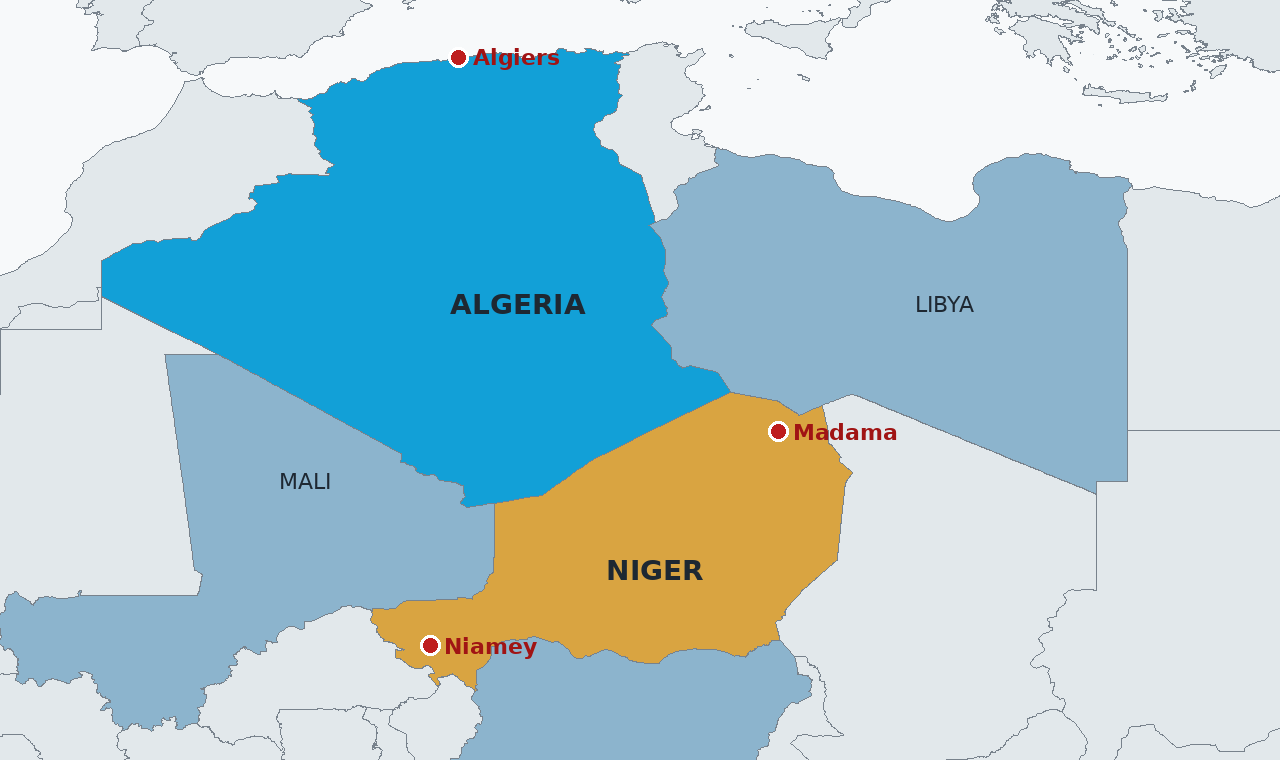
The vote took a day and the announcement took another, and between them Algeria ended a half century of staying home. Parliament approved the deployment on Sunday, the upper house unanimously among the 148 members present and the lower house by an absolute majority, and on Monday the presidency said army units will go to Niger to protect energy and economic interests, at the request of Niger's authorities. Reuters reported the destination as Madama in the far north of Niger, near the Libyan border. How many soldiers, and when they move, Algeria has not said, and that silence is the only familiar part of the story. Everything else about it breaks with the doctrine Algeria has preached since independence: no Algerian soldier fights on foreign soil.
The last time was 1973, when Algeria sent forces to support Egypt in the war with Israel, and the exception has been quoted ever since as proof of the rule. A constitutional reform in 2020 quietly built the door this deployment walks through, allowing the president to send units abroad with a two thirds vote in each chamber, and the government used it the first time the country's money was directly in the line of fire. Senator Belkacem Boulghiti was plain about the motive as he left the chamber: the troops protect Algeria's economic and strategic interests, particularly its oil facilities in Niger. We are not sending our soldiers to wage war in Niger, he said, but to secure economic infrastructure.
The infrastructure has names. Sonatrach, the state energy giant, works oil acreage in Niger's Kafra block and partners with Nigeria and Niger on the Trans-Saharan Gas Pipeline, the planned line that would carry Nigerian gas through Niger and Algeria to European buyers. A pipeline is a promise drawn across a map, and the middle section of this one crosses a country fighting armed groups linked to al Qaeda and the Islamic State, where thousands have been killed across the central Sahel over the past decade. Algeria can guard its own desert. It cannot guard the far side of the border, and the far side is where its pipeline and its oil blocks sit.
The politics around the vote are as striking as the vote itself. Algeria opposed the 2023 coup that brought Niger's junta to power, relations soured further last year when Niger recalled its ambassador after Algeria shot down a Malian drone near their shared border, and as recently as that row Algiers was the capital lecturing the Sahel juntas from outside. In August it was the first country to back Niger's rulers when a mutiny threatened them, sending aircraft in support, and the two governments have since agreed to deepen cooperation against jihadist violence and trafficking across their roughly 960 kilometre border. The deployment completes that turn: the neighbour Algeria scolded is now the neighbour Algeria protects, because the assets never moved even when the politics did.
What to watch is the shape of the mission once the first units arrive. A small detachment guarding fixed facilities around Madama and the oil blocks is a security contract with a flag on it. Anything larger, patrolling, advising Nigerien forces, moving with them, becomes the regional security role Algeria avoided for fifty years, taken up one pipeline kilometre at a time. Other Sahel governments will be reading the precedent carefully: a state that refused on principle to intervene is now available, at the right price in shared interests, to deploy.
Our call is that the doctrine does not come back. Once Algerian soldiers stand guard over Algerian assets in Niger, every future contract Sonatrach signs in the Sahel will be negotiated with a protection clause behind it, and Algiers will find the role easier to extend than to retire. Expect the first deployment to be small, static and described at every step as exceptional, and expect the exception to be renewed, widened and finally normalised, because the pipeline it protects is designed to run for decades. Algeria has not become an interventionist power this week. It has become something more durable: a state whose army now follows its balance sheet, and balance sheets do not march home.
The Briefing
The day's world, market and sport, measured and in your inbox before breakfast. One email, no noise, free while we build it.
Subscribe by emailSubscribing opens your email app with a note to [email protected]. We never share your address.