Ukraine paused its refinery strikes for Washington. Then the fires came back in Samara.
For about two weeks, under heavy American pressure, Ukraine held off hitting Russian oil refineries, one of its few tools for raising the cost of the war. Overnight into Friday, fires were reported at the Novokuybyshevsk refinery in Russia's Samara region, and the pause looks over almost as soon as it became public.
Kyiv, Ukraine · October 30, 2026
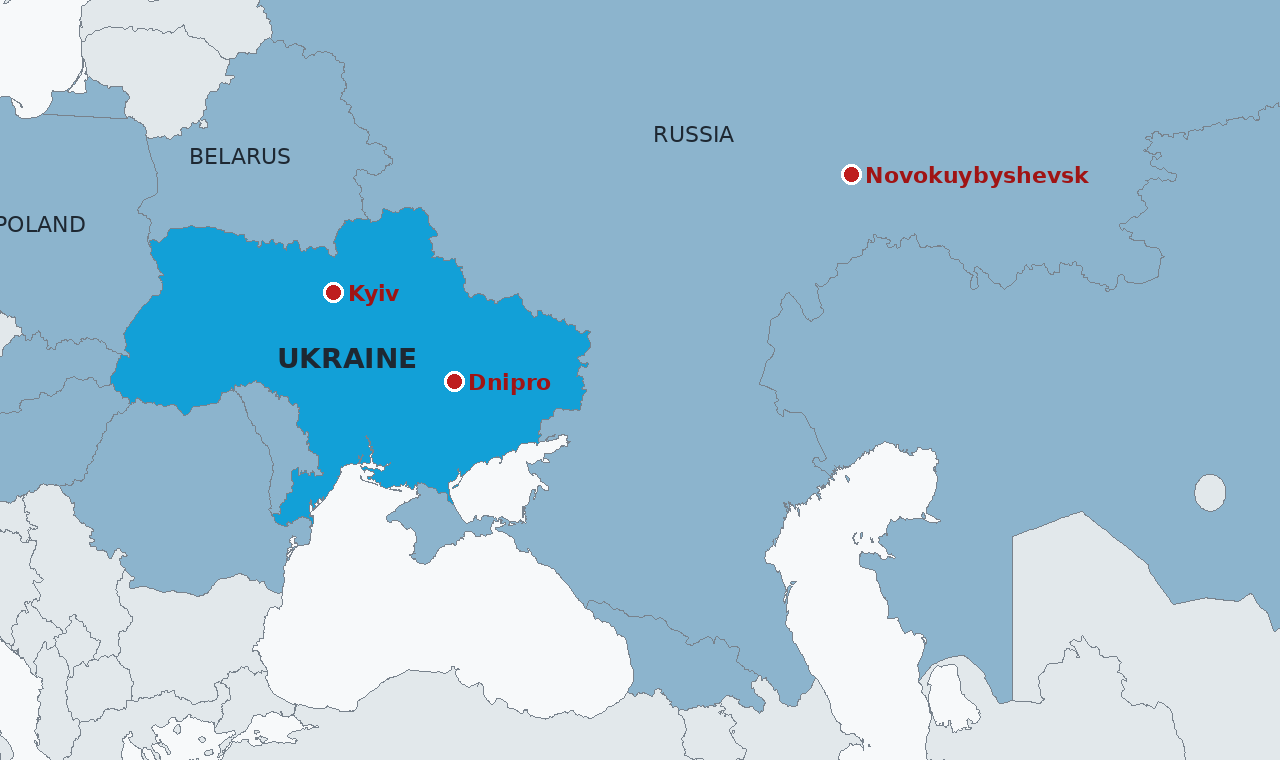
The fires were reported before the diplomacy had finished being reported. Overnight into Friday, residents of Novokuybyshevsk, in Russia's Samara region, posted explosions and air defence fire, and the independent Russian outlet ASTRA identified the blaze from readers' photographs as the Novokuybyshevsk oil refinery, a Rosneft plant that makes jet fuel for Russia's air force and can process about 8.8 million tonnes of crude a year. Samara's governor confirmed a drone attack on the region and said air defences were working, without naming the refinery, and Ukraine's General Staff had not claimed the strike in the first reports. The damage is not yet known. What is known is the timing: this was the first reported strike on a Russian refinery in about two weeks, and it came a day after the reason for the silence became public.
The pause was real, and it was not Kyiv's idea. The Wall Street Journal reported on Thursday that Ukrainian long range strike units were told in mid October that the refinery campaign was effectively on hold once missions already in motion were done. Ukraine last hit a refinery on October 15 and had not struck Russian oil infrastructure of any kind since October 20. Behind the hold sat weeks of pressure from President Trump, who has publicly blamed Ukraine's strikes for high fuel prices, and a direct ask delivered in Oslo, where Jared Kushner told President Volodymyr Zelensky that a 30 day pause on refineries would be a way to show gratitude while American envoys worked on Moscow. The pressure had an edge to it: in the same stretch, Trump called for Zelensky's removal, and SpaceX limited Ukraine's military Starlink service on October 14 in a way that cramped drone operations, before full service was restored on October 24 after Trump asked Elon Musk to lift the limits. American officials said the two issues were not linked. Kyiv was free to read the sequence its own way.
Zelensky never sold the pause as a deal, and his own words this week left the door visibly open. He told reporters in Kyiv on Tuesday that his forces had tried to be a little more careful in recent days but had no order not to hit refineries. His defence minister had judged it best to hold off given the delicate diplomacy, and Zelensky let that judgement stand while stressing the military stayed free to strike again if it chose. He has also said plainly what Kyiv wants in return for any longer halt: protection for Ukraine's own energy infrastructure, which Russia is systematically attacking ahead of winter. That condition was not met this week. On Thursday a Russian jet powered drone hit a crowded platform at Dnipro's main station as a commuter train prepared to leave for Zaporizhzhia, killing at least 14 people, with five more killed in daytime strikes on other cities, Reuters reported. Russia kept striking through the whole of Ukraine's pause. Only one side was pausing.
European allies, the Journal reported, advised Kyiv to hold off at least until after the US midterm elections, to lower the temperature with Trump. The Samara strike says that advice lost. It is worth being precise about what has and has not been established: the refinery fire rests on monitoring channels, residents' footage and ASTRA's identification, not on a Ukrainian claim or a Russian admission, and a single night's strike could still be a signal rather than a resumed campaign. The plant itself is a considered target if it is one, hit before in August and forced to suspend both its main crude units after a strike in April, deep inside Russia and tied directly to military jet fuel.
Our call is that the pause died of its own design. It was unofficial, unreciprocated and priced in a currency Kyiv never agreed to accept, restraint traded for gratitude rather than for air defence or a Russian halt in return. A pause like that holds only while the pressure that created it outweighs the cost of honouring it, and Dnipro on Thursday changed that arithmetic in a single morning. Watch the next week rather than the next statement. If refinery strikes follow in a pattern, the campaign is back and Washington has to decide whether its leverage over Kyiv is worth spending again, this time in public. If Samara stands alone, it was a message, sent in fire because fire is the language this negotiation keeps returning to: Ukraine can be asked to hold its hand, but it will not hold it for free, and not while its own platforms are being hit.
The Briefing
The day's world, market and sport, measured and in your inbox before breakfast. One email, no noise, free while we build it.
Subscribe by emailSubscribing opens your email app with a note to [email protected]. We never share your address.