Nord Stream stays shut. Brussels has written that answer into law.
Talk in Washington and Moscow about bringing a US investor into the Baltic pipelines met a flat answer in Brussels this week: the gas was weaponised once, the replacement system is already built, and the phase out runs in law whether or not the war ends.
Brussels, Belgium · October 30, 2026
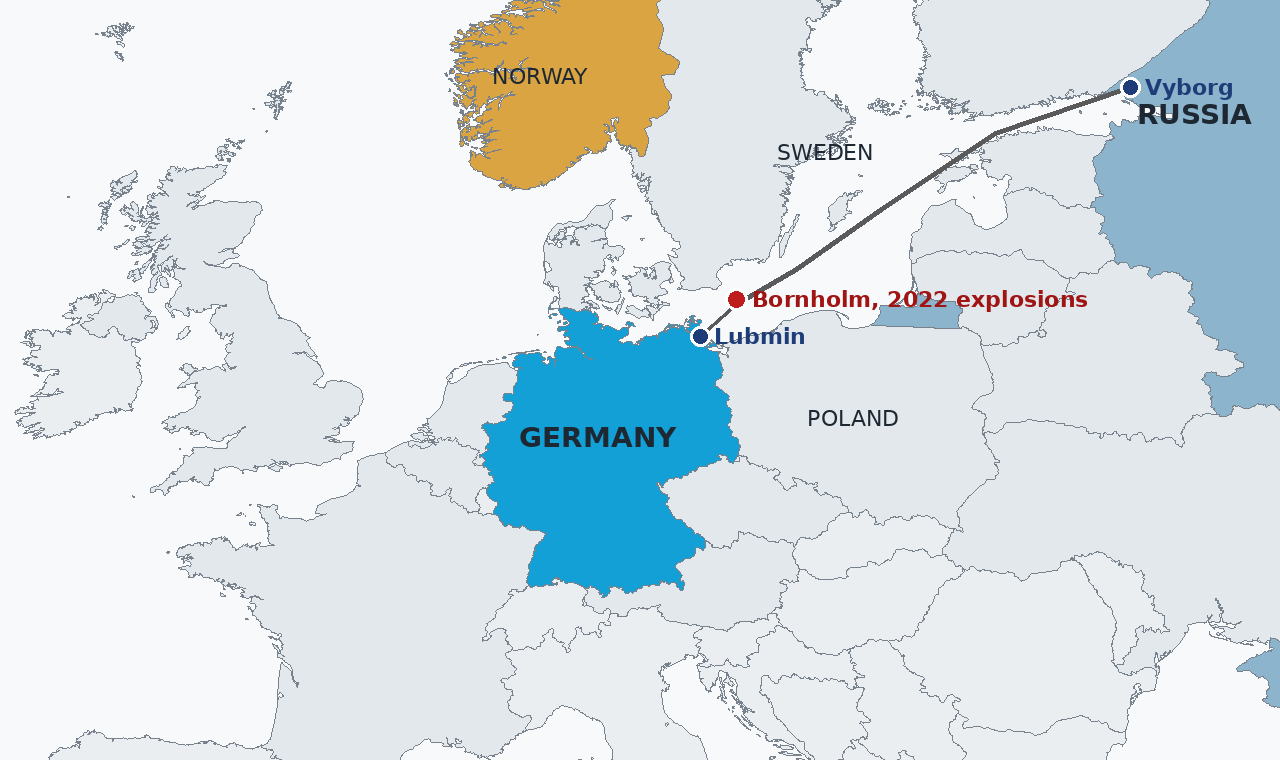
The pipelines are still down there, twin lines running more than 1,200 kilometres under the Baltic from the Russian coast to Lubmin in Germany, and for a few weeks this autumn there was serious talk in two capitals about turning them back on. Reuters reported on October 8 that senior American and Russian officials, among them US envoy Jared Kushner and Kirill Dmitriev, the Putin adviser who runs Russia's sovereign wealth fund, had discussed bringing a US investor into Nord Stream and resuming Russian gas sales to Europe. A White House official disputed that any Nord Stream discussions had happened recently, and a second American official called a deal unlikely in the medium term. This week Brussels stopped treating the idea as speculation and answered it in public. Nord Stream stays shut.
The answer came at the Commission's midday briefing on Wednesday, in reply to a question from Euronews about whether the pipelines could reopen after the war. Paula Pinho, the Commission's chief spokesperson, reached for memory rather than law first. Europe knows far too well, she said, the hidden costs of depending on Russia for fossil fuels: they have been weaponised, Europe has been paying the price, and it does not forget that. She pointed to President Ursula von der Leyen's line that energy sanctions stay until Russia stops the war. Anna-Kaisa Itkonen, the energy spokesperson standing beside her, then closed the postwar loophole the question was really about. The legislation in force, she said, is not tied to sanctions or to any geopolitical event. Regardless of what happens, Russian gas and liquefied gas are being phased out of the European market, and the last shipments should be finished by the end of next year.
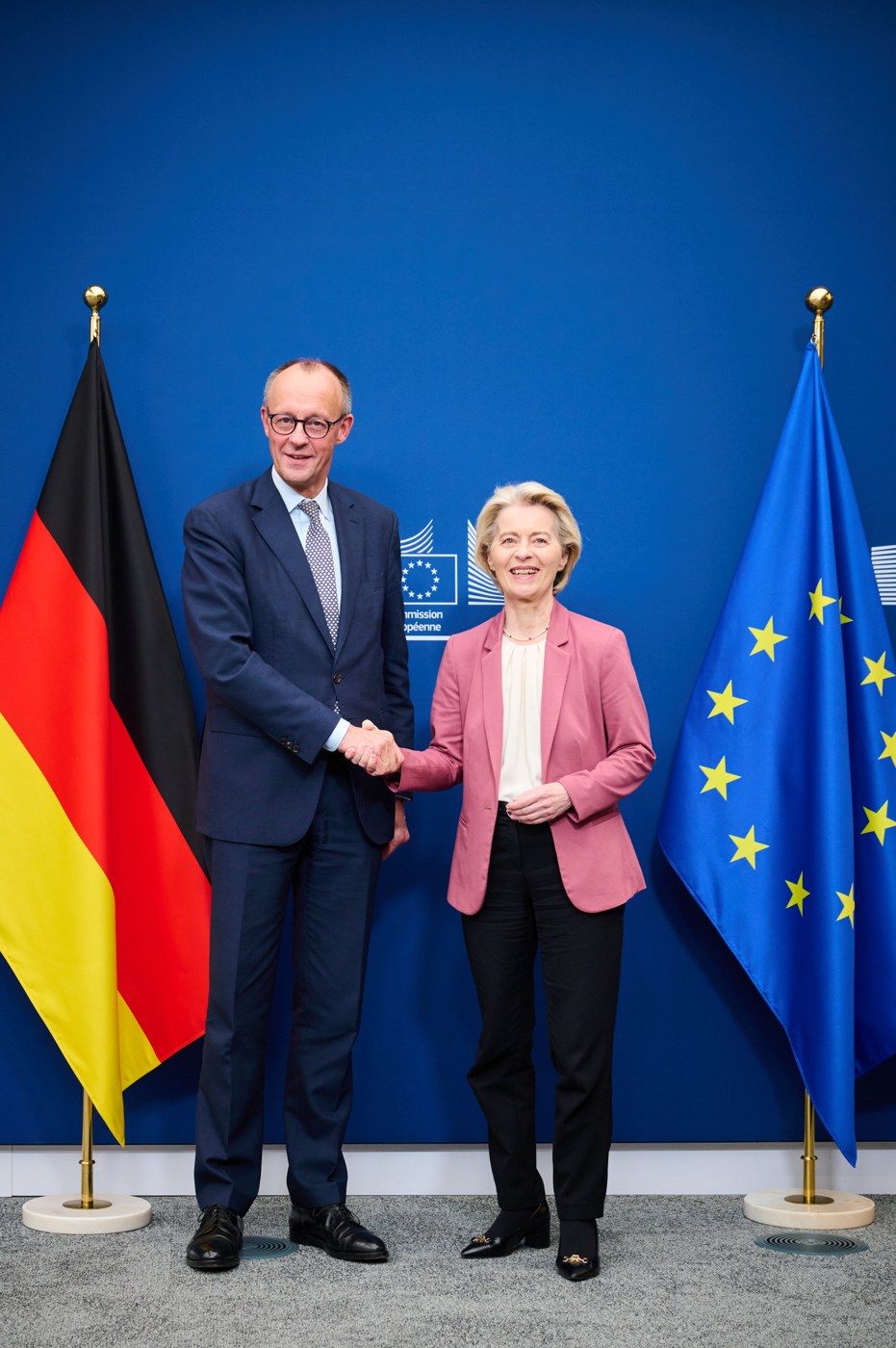
Berlin's position sits underneath that, and it is just as flat. Germany's economy and energy ministry told Reuters that Nord Stream and Russian gas are sanctioned in Europe, that Germany has found alternatives, and that any reopening would require government approval which is not desired. Chancellor Friedrich Merz has said since last year that Germany will do all it takes to keep Nord Stream 2 offline. That matters because the pipelines land in Germany: whatever Washington and Moscow might agree between themselves, the valve at the European end has a German hand on it, and a European law behind the hand.
The physical story explains why nobody in Brussels talks about these pipelines as an asset waiting to be switched back on. Moscow halted flows through Nord Stream 1 at the end of August 2022. On September 26 that year, explosions near the Danish island of Bornholm ruptured both Nord Stream 1 strings and one of the two Nord Stream 2 strings. Three of the four lines were destroyed. Nord Stream 2, finished in 2021, had never been certified by Germany and never carried commercial gas at all, and the EU's July 2025 sanctions package banned transactions tied to completing, operating or maintaining either pipeline. What is left on the seabed is closer to evidence than infrastructure.
And the law Pinho and Itkonen were citing is specific enough to plan around. The regulation phasing out Russian gas was adopted in January 2026, after the Council and the European Parliament agreed it the previous December. Short term contracts written before June 2025 lost their cover in stages through this spring. Long term liquefied gas contracts end on January 1, 2027, and long term pipeline gas contracts end on September 30, 2027, with a possible stretch to November 1, 2027 only if member states fall behind on filling gas storage. A peace deal changes none of those dates, because the regulation was deliberately written to stand apart from the sanctions track. Reopening Nord Stream would not be a diplomatic gesture. It would be a repeal.
The deeper reason a repeal is so hard to imagine is that Europe already paid for the alternative. Russia supplied 45 percent of the gas the EU imported in 2021, some 152 billion cubic metres. Last year the share was 12 percent, about 36 billion cubic metres. Norway is now the bloc's biggest supplier, with 89.3 billion cubic metres in 2025, almost a third of all imports, arriving by pipeline under the North Sea. The United States is second overall and supplies almost six in ten of Europe's liquefied gas cargoes, to terminals that Germany, Poland, the Netherlands and Croatia rushed into service. From the south, Azerbaijan sent 12.5 billion cubic metres up the Southern Gas Corridor in 2025, half as much again as before the war, while European gas demand itself has fallen 19 percent since August 2022. None of that was cheap, and that is rather the point: sunk cost is a political argument, and billions spent escaping a supplier are hard to vote into reverse.
Pressure to try will keep coming, and it is worth naming where from. Cheap Russian gas remains a live campaign theme for the AfD in Germany, energy bills remain the easiest line of attack on any government in Europe, and any serious peace negotiation over Ukraine will test whether gas gets traded as part of a settlement, which is exactly the conversation the Reuters report described. The one genuine crack in the wall is administrative rather than political: that storage deadline, which can push the final pipeline cutoff from the end of September 2027 to the start of November if Europe enters that autumn short of gas. A cold winter, not a summit, is the likeliest source of slippage.
Our call is that the door stays shut through any peace deal, because Brussels has done the one thing that makes a refusal durable: it has moved the decision out of the room where bargains get struck. A sanctions promise can be traded away in a negotiation. A regulation with dates in it has to be unpicked in public, by governments that would then have to explain why the terminals, contracts and pipelines built since 2022 were a waste, and why the supplier who turned the taps off once should be handed the lever again. So watch the unglamorous things rather than the summit language: whether anyone tables an amendment to the phase out regulation, whether storage filling wobbles next year, and whether Berlin's approval line moves by even a word. Until one of those shifts, the pipelines stay where the explosions left them, on the seabed, as the most expensive monument in Europe to a dependency it has decided, in law, never to rebuild.
The Briefing
The day's world, market and sport, measured and in your inbox before breakfast. One email, no noise, free while we build it.
Subscribe by emailSubscribing opens your email app with a note to [email protected]. We never share your address.