Japan is going to land on a moon of Mars and bring a piece of it home
The MMX spacecraft launches from Tanegashima on Tuesday, bound for Phobos. No sample has ever been returned from a Martian moon. If the five year mission holds, a capsule carrying at least 10 grams of another world lands in Australia in 2031.
Tanegashima, Japan · October 19, 2026
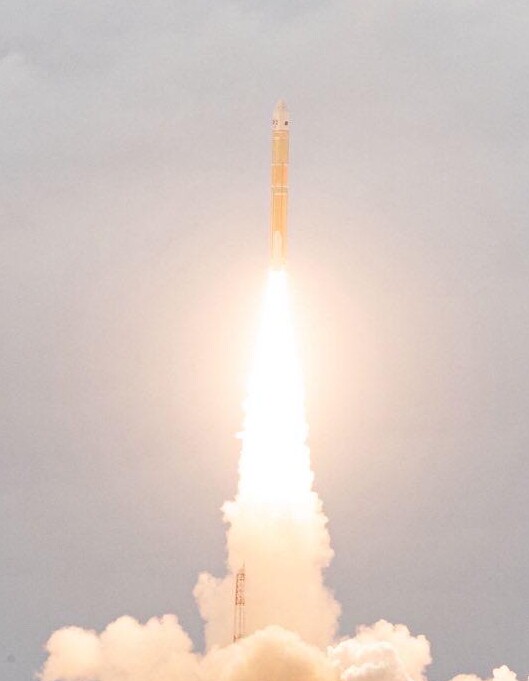
Japan's space agency JAXA is about to attempt a first. Its Martian Moons eXploration spacecraft, MMX, launches from Tanegashima on Tuesday, October 20, at 4:41 in the morning local time aboard an H3 rocket, bound for Phobos, the larger of Mars's two moons. The aim is to land, collect material, and bring it back to Earth, something no mission has done from the Martian system.
The timeline is measured in years, not news cycles. MMX reaches Mars in August 2027 and spends about three years in the Martian system, studying both moons. A small rover named IDEFIX, built with European partners, will scout the surface of Phobos ahead of the sampling. The target is at least 10 grams of material, a small jar's worth, for a return capsule due to land in Australia in 2031.
The science case is an origin story. Nobody knows for certain whether Phobos is a captured asteroid or debris blasted off Mars by an ancient impact, and a sample in a laboratory settles arguments that telescopes and orbiters have circled for decades. Material from Phobos may also carry traces of Mars itself, which would make this modest mission a back door to the most contested sample in planetary science: a piece of Mars, without landing on Mars.
The mission runs with NASA, the European Space Agency and the French and German space agencies alongside JAXA, and its project lead, Yasuhiro Kawakatsu, has been clear about the stakes in his public remarks ahead of launch. Sample return missions are where space agencies prove they can do the hardest thing in exploration, which is not getting there. It is getting back. The first answer arrives on Tuesday morning, Japanese time, in about four minutes of rocket flight. The rest takes five years.
The Briefing
The day's world, market and sport, measured and in your inbox before breakfast. One email, no noise, free while we build it.
Subscribe by emailSubscribing opens your email app with a note to [email protected]. We never share your address.