RTX Spark, reviewed: brilliant at local AI, ordinary at plenty else, and priced like it knows it
The first independent tests of Nvidia's Spark laptops are in, and the verdict splits clean in two. At running big AI models on the desk itself, nothing else is close. At almost everything else a laptop does, the reviews are a shrug with a large price tag attached.
October 24, 2026
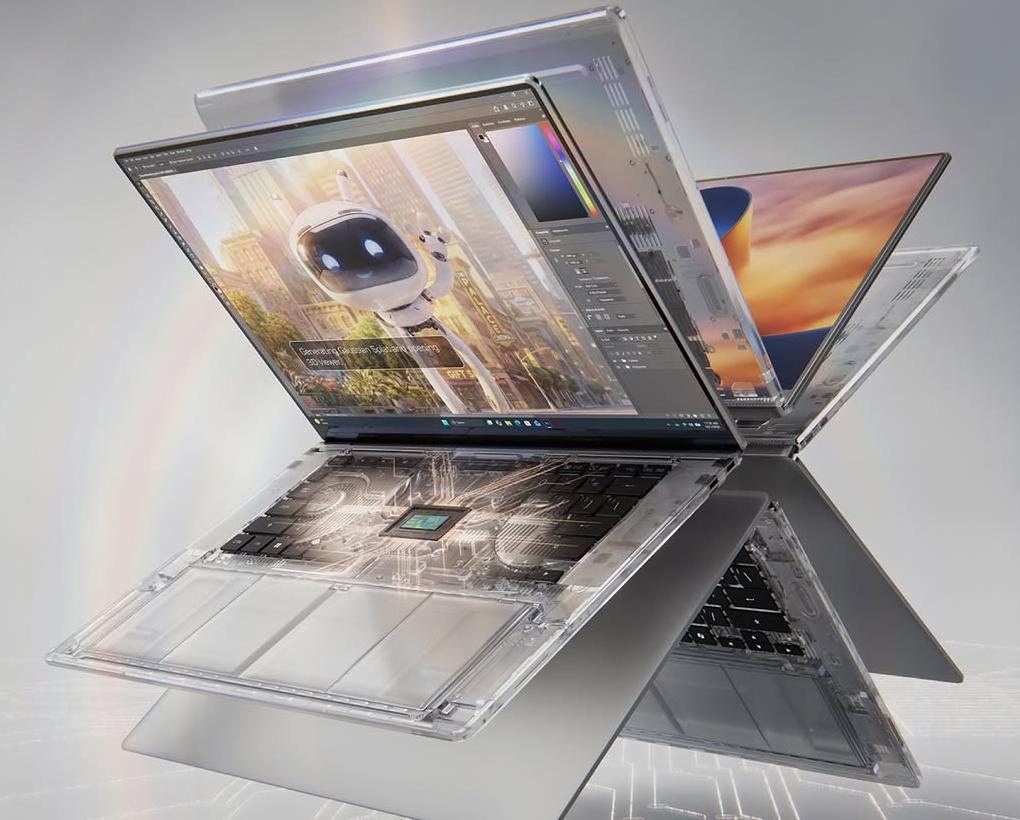
Launch week told us what Nvidia wanted RTX Spark to be. Review week has told us what it actually is. The first independent benchmarks of the new laptops, published between October 18 and 20, draw a line down the middle of the machine: on one side, local AI performance nobody else can touch; on the other, gaming, battery life and value that trail laptops costing far less.
The AI numbers are not close. In testing by Principled Technologies, Spark laptops built by Microsoft, HP and ASUS generated AI video up to 5.7 times faster than a 16 inch MacBook Pro with an M5 Pro chip, AI images up to 4.3 times faster, and produced the first token of a local language model up to 2.1 times faster. Tom's Hardware, testing the top Surface Laptop Ultra, found a MacBook Pro with the stronger M5 Max chip took about 25 percent longer on its local AI agent test, and an AMD rival roughly twice as long, and called Spark the fastest platform it has tested at this kind of work.
The reason is memory, and it is the whole design. Spark pairs a 20 core Grace processor with a Blackwell graphics chip, and both draw on one shared pool of up to 128GB. A pool that large lets a model of more than 120 billion parameters live entirely on the laptop, with no cloud, no subscription and nothing leaving the desk. That is a workload that normally rents time in a data centre, squeezed into a machine you can carry under one arm.
You can buy one today, if your budget stretches. Microsoft's Surface Laptop Ultra and the ASUS ProArt P14 start at $2,599.99, the ProArt P16 just above that at $2,799.99, and Lenovo's machines start at $3,099.99. HP's OmniBooks follow on November 4, from $2,999.99. What the entry price buys, though, is the cut down chip: fewer processor and graphics cores and as little as 24GB of memory, in a machine whose memory is soldered in for life. Pick wrong on day one and you own the mistake. Fully loaded, a Surface climbs to $5,899.99 and a ProArt P16 to $6,999.99.
That is where the reviews turn. Testers found games running behind cheaper gaming laptops and discrete graphics machines, and battery life and efficiency falling short of the MacBook Pro these prices invite comparison with. Spark is not a better all round laptop. It is a specialist instrument that happens to be shaped like one.
Our call is that Spark's real contest is not against Apple at all. It is against the cloud bill: the buyer Nvidia is actually courting is the developer or small studio paying monthly for rented AI compute, for whom a $2,600 machine that answers in private and never meters a prompt pays for itself within a couple of years. For that buyer, the first reviews say buy with confidence, but buy the memory, because the solder makes the cheap configuration the expensive mistake. For everyone else, the verdict stands as the testers left it: your money works harder elsewhere, at least until the second generation fixes the battery and the gaming gap.
The Briefing
The day's world, market and sport, measured and in your inbox before breakfast. One email, no noise, free while we build it.
Subscribe by emailSubscribing opens your email app with a note to [email protected]. We never share your address.