Killed answering an Ebola alert: the outbreak response in Congo is being attacked by the people it came to help
A nurse was killed and a health worker severely injured on Saturday while responding to an Ebola alert in Bafwasende, in Congo's Tshopo province. The WHO condemned the attack as the deadliest Ebola outbreak in the country's history passed 9,800 cases and 4,700 deaths.
Bafwasende, Congo · October 25, 2026
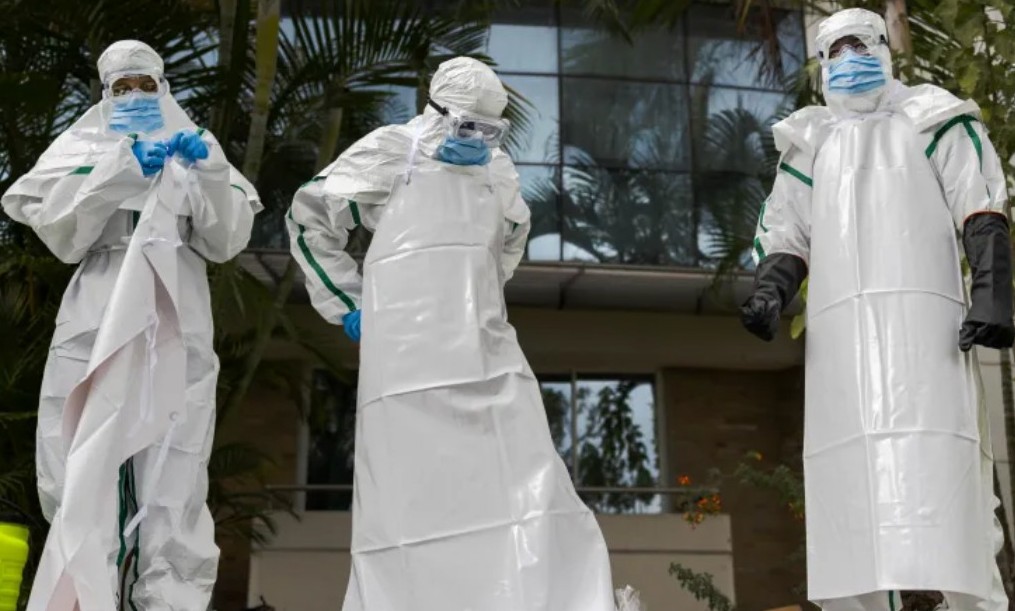
The alert was the system working. Somewhere in Bafwasende, a town in Congo's eastern Tshopo province, a suspected Ebola case was reported, and a response team did what the response exists to do: it went. On Saturday the team was attacked. A nurse was killed and a health worker severely injured, the World Health Organization said, the latest in a series of attacks on the people trying to slow the fastest growing Ebola outbreak in the world. Local authorities have not commented on who carried it out.
The condemnation from Geneva was blunt in the way these statements rarely are. Everyone working to protect communities from this deadly disease must be able to work in dignity and safety, the WHO's director general, Tedros Adhanom Ghebreyesus, wrote on Sunday. Healthcare must always be protected. His regional director for Africa, Mohamed Yakub Janabi, named the fuel directly: misinformation and fear must never fuel violence. Between the two statements sits the outbreak's central, brutal fact. The health ministry's latest figures record more than 9,800 cases and more than 4,700 deaths since the outbreak began in May, which makes it the deadliest Ebola outbreak in Congo's history, and it is being fought, in part, against the communities it is trying to save.
Bafwasende is not an isolated spasm. Responders describe a population among whom Ebola is widely dismissed as a hoax, layered over years of distrust in a government whose handling of earlier outbreaks and everyday corruption gave people reasons to doubt official voices. Last month a Congolese politician who had been defending the response on the radio, urging people to wash hands and keep distance, was beaten to death in North Kivu. In May, tents at health centres were set alight in separate attacks a week apart. Each incident takes a team off the road, and in an outbreak, a team off the road is not a staffing problem. Contacts go untraced, alerts go unanswered, and the virus gets the one thing it needs, which is time unobserved.
Set against the wider outbreak, the arithmetic is unforgiving. This is the same epidemic that has already crossed borders, killed in Kenya and pushed case counts past anything Congo has recorded before, and the scientific response is racing on a parallel track, with vaccine trials under way to test whether jabs built for other strains can protect against this one. Trials and tracing both depend on the same fragile permission: that a stranger in protective clothing, arriving in a frightened village, is read as help rather than threat. Bafwasende is what it looks like when that permission is withdrawn.
Our call is that the security question is now the outbreak question, and treating it as a side issue will keep costing responders their lives. Congo has beaten Ebola before, repeatedly, with contact tracing, community engagement and ring vaccination, and none of that machinery works at the speed of violence. The response needs protected access negotiated community by community, and local voices, religious leaders, teachers, survivors, carrying the message further than any ministry official can. Until the nurse answering the next alert in Tshopo is safer than the virus she is chasing, the curve will keep bending the wrong way, not because the science failed, but because the science could not get through the door.
The Briefing
The day's world, market and sport, measured and in your inbox before breakfast. One email, no noise, free while we build it.
Subscribe by emailSubscribing opens your email app with a note to [email protected]. We never share your address.