Nearly 10,000 cases, four countries, no approved vaccine: the outbreak science is racing to catch
Kenya has recorded a second Ebola death, a 65 year old woman who fell ill in quarantine, as the Bundibugyo outbreak that began in Congo passes 9,700 cases and 4,600 deaths there. In Bunia, a WHO backed trial called Tumaini has started vaccinating, testing whether a jab built for a different strain can cross over.
Nairobi, Kenya · October 24, 2026
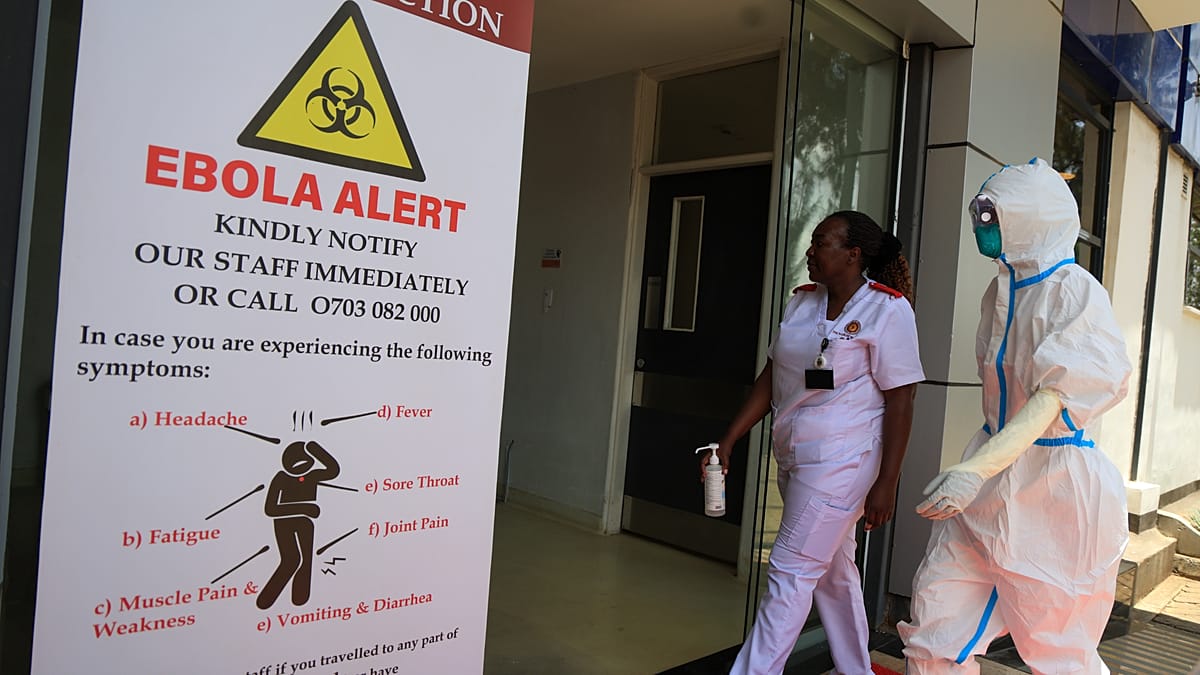
The second death in Kenya was, in one narrow sense, the system working. The health ministry said late on Friday that a 65 year old woman, a close relative of the Kenyan man who died of Ebola earlier this month, had developed symptoms while already in quarantine as a traced contact, and had died. She is the second death among nine confirmed cases in Kenya. The other seven patients are still receiving care in two isolation facilities, and the ministry says there is no evidence of community spread in the country.
The chain behind her case shows both the strength and the limits of the response. Kenya's first case was a man who travelled from the Democratic Republic of Congo to Nairobi and died in a hospital there on October 5. Authorities traced 135 of his contacts and placed them in quarantine, which is why the woman who died on Friday was already being watched when she fell ill. But on Tuesday Nigeria became the fourth country to confirm a case, in a patient who had not travelled to Congo, and officials there are still trying to work out how she caught it. The United States has raised its travel advisory for Kenya, urging Americans to reconsider travel because of the health risks.
The outbreak she died in is the widest Ebola outbreak on record by geography, reported across eastern, central and western Africa, and in Congo alone it has infected nearly 10,000 people and killed more than 4,600, the country's worst ever toll from the virus. The strain behind it, Bundibugyo, is a rare species of Ebola with no approved vaccine and no approved treatment. It spreads through direct contact with the bodily fluids of an infected person, and only people showing symptoms can pass it on, which is the one fact the whole containment strategy leans on.
So the science is being run as a race. On Friday the World Health Organization announced that the first participants in Bunia, in Congo, had been vaccinated in a trial called Tumaini, the Swahili word for hope. The trial tests Ervebo, a vaccine already approved against the more common Zaire strain, to see whether it offers any protection against Bundibugyo. Its framework can also absorb two vaccines built specifically for this strain, one from the University of Oxford using an adenovirus vector and one from Moderna using mRNA, both still moving through smaller early trials.
Our call is that the next decisive fact is not a case count, it is the Nigeria answer. Kenya's two deaths both sat inside a known contact list, which means tracing held there. A case with no travel link and no known chain means the map of the outbreak has at least one hole in it, and every response plan is only as good as that map. Watch whether Nigerian officials can name the source within days. If they can, containment is still ahead of the virus in the new countries, and the Tumaini readout becomes the story. If they cannot, the widest Ebola outbreak on record is wider than anyone's list, and the vaccine trial stops being a scientific question and becomes the only plan left.
The Briefing
The day's world, market and sport, measured and in your inbox before breakfast. One email, no noise, free while we build it.
Subscribe by emailSubscribing opens your email app with a note to [email protected]. We never share your address.