Tesla sells 28 billion dollars of cars and spends the profit on its second act
Revenue of 28.05 billion dollars and an earnings beat sit on top of a 56 percent fall in operating profit. The car business is paying, handsomely and for now willingly, for Tesla's second life as an AI company.
Austin, United States · October 21, 2026
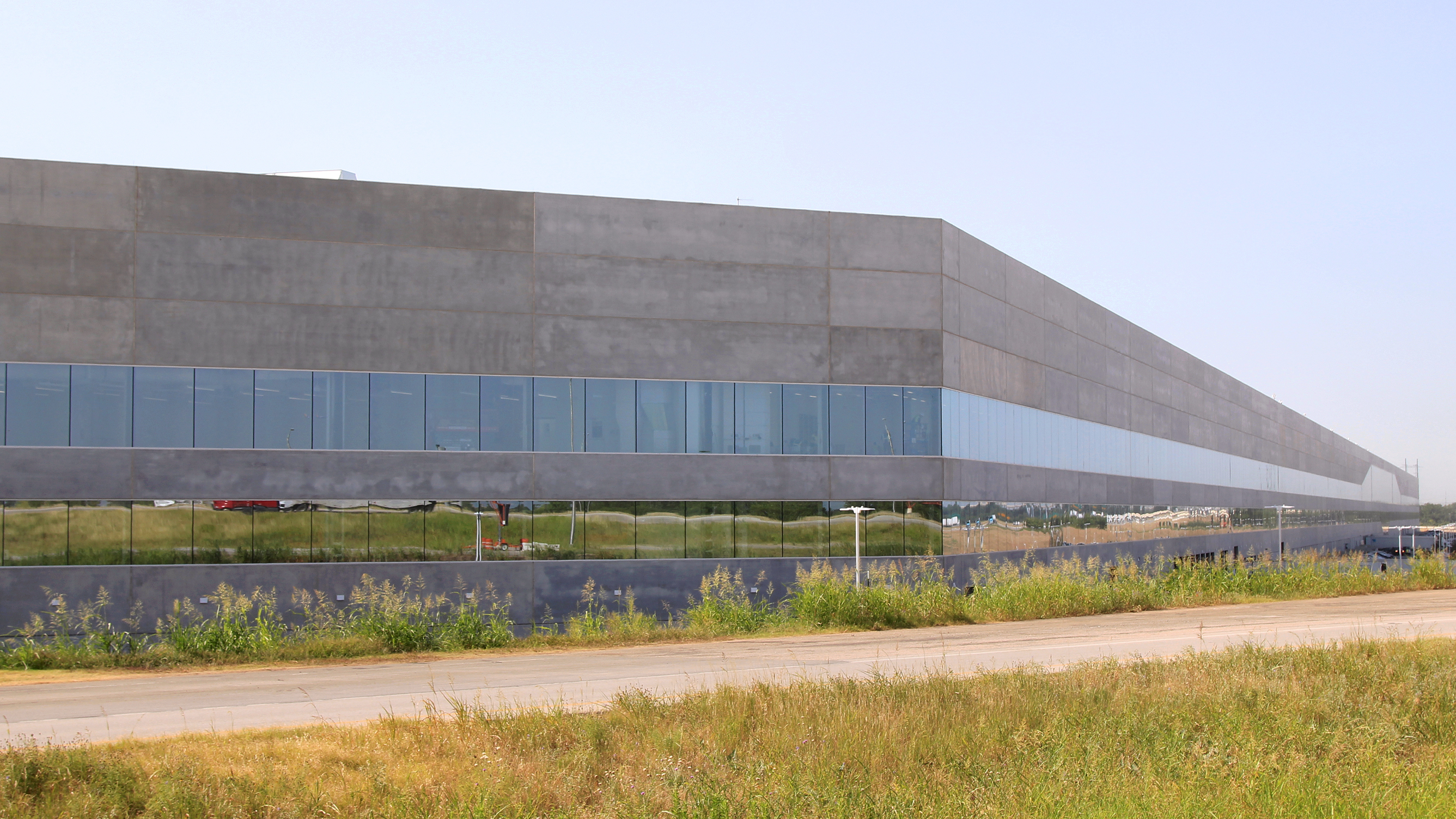
Twenty eight billion dollars in sales, and the profit line still fell by more than half. Tesla's third quarter, reported on Wednesday after the close, is really two stories sharing one set of accounts. Revenue came in at 28.05 billion dollars, roughly flat against 28.10 billion a year ago. Adjusted earnings hit 48 cents a share, comfortably ahead of the 45 cents analysts expected, and car margins climbed to about 18 percent. Deliveries held up at 486,532 cars, against production of 464,391.
Then the second story starts. Operating profit fell 56 percent to 718 million dollars, a margin of just 2.6 percent, because operating spending jumped 39 percent to 4.78 billion dollars. That money is going on artificial intelligence, robotaxis and robots, and it is going out faster than the car business is growing. Reported earnings per share were 22 cents. Energy storage chipped in 13.7 gigawatt hours of deployments, a record business line that still sits in the shadow of the spending decision.
The self driving numbers are the bridge between the two stories. Active subscriptions to Tesla's Full Self-Driving package rose 67 percent in a year to 1.74 million, and more than 75 percent of new North American deliveries included it. That is the argument in product form: the car is becoming the distribution channel for a software business with far better margins than metal.
And Tesla can afford the argument, for now. Operating cash flow was 6.26 billion dollars, free cash flow 1.53 billion after 4.73 billion of capital spending, and the company holds 45.4 billion dollars in cash and investments. A business with flat revenue and a squeezed margin is usually a warning. A business with that cash pile is making a choice, and the choice is to spend the car company's present on an AI company's future.
Our call is that investors keep accepting the trade while two numbers hold: deliveries steady near half a million a quarter, and FSD subscriptions compounding. Either one can carry the story alone for a quarter or two. The dangerous quarter is the one where deliveries dip at the same time as the spending peaks, because then the funding arm and the bet weaken together, and 45 billion dollars starts being counted instead of admired.
The Briefing
The day's world, market and sport, measured and in your inbox before breakfast. One email, no noise, free while we build it.
Subscribe by emailSubscribing opens your email app with a note to [email protected]. We never share your address.